
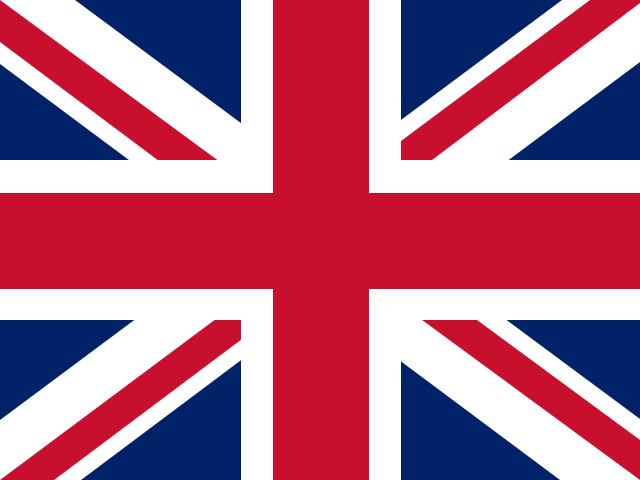
United Kingdom
Complete data on the United Kingdom: geography, population, economy, culture, institutions, key indicators and statistics. Information updated in real time.
Time and date in the United Kingdom
Overview
The United Kingdom, officially the United Kingdom of Great Britain and Northern Ireland, is an island state in Western Europe. It is made up of four constituent nations: England, Scotland, Wales and Northern Ireland. With a population of about 69.5 million inhabitants (2025), it is the third most populous country in Europe.
The United Kingdom is a major economic power, the sixth economy in the world and the second in Europe, with a GDP of about £3,040 billion in 2025. It is a permanent member of the UN Security Council, the G7, the G20, NATO and the Commonwealth. Its capital is London, and its official language is English. The country is a constitutional monarchy whose head of state has been King Charles III since 2022. The United Kingdom left the European Union on 31 January 2020 (Brexit).
Data on the United Kingdom
Geography of the United Kingdom
The United Kingdom is an island state located off the north-western coast of continental Europe. It comprises Great Britain (England, Scotland and Wales) and Northern Ireland, which shares a land border with the Republic of Ireland. Its total area is about 244,100 km², of which 130,400 km² for England, 78,800 km² for Scotland, 20,800 km² for Wales and 14,100 km² for Northern Ireland. The country is separated from the continent by the English Channel and the Strait of Dover.
British relief is varied. England is dominated by plains and gentle hills, with the Pennines (mountain range) to the north and the Lake District to the west. Scotland is home to the Highlands, a mountainous and wild region, and to the country's highest point, Ben Nevis (1,345 m). Wales is also mountainous, with the Cambrian Mountains. Northern Ireland includes Lough Neagh, the largest lake in the British Isles.
The hydrographic network is dominated by the Thames, which crosses London and is a major navigable waterway. The Severn is the longest river in the country (354 km). The United Kingdom also has an extensive maritime coastline, with jagged coasts and many estuaries. The country is bordered by the North Sea to the east, the English Channel to the south and the Atlantic Ocean to the west and north.
Population and demographics
The United Kingdom has about 69.5 million inhabitants (2025), making it the third most populous country in Europe. Its average density is about 285 inhabitants/km², but this distribution is very uneven: England is densely populated (over 430 inhab/km²), while Scotland is much less dense (about 70 inhab/km²).
The country is experiencing a gradual demographic ageing, with a median age of about 40 years. The birth rate is relatively low, around 1.6 children per woman. Life expectancy is about 81 years (79 years for men, 83 years for women). Immigration plays an important role in population growth.
| Indicator | Value |
|---|---|
| Total population (2025) | 69.5 million |
| Population density | 285 inhab/km² |
| Fertility rate | 1.6 children per woman |
| Life expectancy | 81.0 years (men: 79.0 - women: 83.0) |
| Median age | 40.0 years |
| Urban population | 84 % |
| Immigrant population | ~10 million (14% of the population) |
Urban distribution is dominated by the London agglomeration, which has about 9.1 million inhabitants (Greater London, 2024). Other major cities are Birmingham (1.1 million), Manchester (0.55 million), Glasgow (0.63 million), Liverpool (0.5 million) and Edinburgh (0.5 million).
Population change (1950-2025)
Population by age (2025)
Climate in the United Kingdom: temperatures and precipitation
The United Kingdom enjoys a temperate oceanic climate, characterised by mild winters, cool summers and precipitation spread throughout the year. The influence of the Atlantic Ocean and the Gulf Stream softens temperatures, but the country is often swept by depressions bringing rain and wind.
According to the Met Office 1991-2020 averages, the average annual maximum temperature in the UK is 12.8 °C and the minimum is 5.5 °C. Summers (July-August) show average highs around 19-20 °C, with peaks that can exceed 30 °C during heatwaves. Winters (January-February) are mild, with highs around 7 °C and lows around 1 °C.
Precipitation is abundant and regular, with an annual average of about 1,163 mm. The wettest regions are western Scotland, Wales and the Lake District, where precipitation can exceed 2,000 mm per year. Eastern England, around London and Cambridge, is drier, with about 600 mm per year.
Average monthly temperatures (°C) - UK average
Monthly precipitation (mm) - UK average
Data based on historical averages (1991-2020) for the United Kingdom. Source: Met Office.
Languages
The official language and the most spoken in the United Kingdom is English, with about 60 million native speakers in the country. English is the language of administration, education, media and business. The United Kingdom is also the birthplace of modern English, which is now the most widely spoken language in the world as a second language.
Languages spoken in the United Kingdom
The United Kingdom officially recognises several regional languages. Welsh (Cymraeg) is an official language in Wales, spoken by about 20% of the Welsh population. Scottish Gaelic is spoken in the Highlands and Hebrides, and Irish Gaelic in Northern Ireland. Scots is also recognised in Scotland. The most widely spoken foreign languages are Polish, Urdu, Punjabi and Gujarati, reflecting the importance of immigration.
Religions practised in the United Kingdom
The United Kingdom is a country with a Christian tradition, but society is increasingly secularised and diverse. The Church of England (Anglican) is the established church in England, and the monarch is its supreme governor. The Church of Scotland (Presbyterian) is the national church in Scotland. According to the 2021 census for England and Wales, 46.2% of the population declared themselves Christian, down from 59.3% in 2011.
Religions in England and Wales (2021)
The most striking fact is the spectacular growth of people with no religion: 37.2% of the population of England and Wales declared no religion in 2021, compared with 25.2% in 2011. Other main religions are Islam (6.5%), Hinduism (1.7%), Sikhism (0.9%), Judaism (0.5%) and Buddhism (0.5%). London is the most religiously diverse region, with 40.7% Christians and 15% Muslims.
Economy and GDP
The United Kingdom is the sixth economy in the world and the second in Europe, with a GDP of about £3,040 billion in 2025, growing by 1.4%. GDP per capita stands at about £43,700. The country is a highly developed market economy, dominated by the services sector, which accounts for more than 75% of GDP.
Evolution of UK GDP (billions £)
The tertiary sector is the pillar of the British economy, with finance (London is one of the world's leading financial centres), business services, trade, tourism and media. The secondary sector (industry) accounts for about 10% of GDP, with strengths in aeronautics (Rolls-Royce), pharmaceuticals (AstraZeneca, GSK), automobiles (Mini, Jaguar Land Rover) and defence. Agriculture accounts for less than 1% of GDP.
The United Kingdom is a global trading power, with exports of goods and services of £902.8 billion and imports of £959.2 billion in 2025. Its main trading partners are the European Union (despite Brexit), the United States, China and Japan. The country is also a major exporter of financial services, consulting and technology. London is the world's leading tourist destination in terms of visitor spending.
Breakdown of the economy by sector (% GDP)
Socio-economic indicators
History
The history of the United Kingdom is a millennial history marked by invasions, revolutions and a global empire. The territory has been inhabited since Prehistory, but documented history begins with the Roman conquest (AD 43), which integrated Britannia into the Roman Empire. After the Romans left, the Angles, Saxons and Jutes settled and founded several kingdoms. In 1066, the Norman conquest of William the Conqueror profoundly transformed the country.
History of the United Kingdom: major periods
The Middle Ages saw the emergence of Parliament and the Magna Carta (1215), limiting royal power. The Anglican Reformation (16th century) made Henry VIII the head of the Church of England. The English revolutions of the 17th century established the constitutional monarchy. The Act of Union of 1707 united England and Scotland to form the Kingdom of Great Britain, and the Act of Union of 1800 incorporated Ireland.
The 19th century was that of the Industrial Revolution, born in the United Kingdom, and the apogee of the British Empire, the largest in history. The 20th century was marked by the two World Wars, decolonisation and the construction of the welfare state (NHS created in 1948). The United Kingdom joined the European Economic Community in 1973 and left the European Union on 31 January 2020 (Brexit).
The national day is not officially defined, but Trooping the Colour (the monarch's official birthday, in June) and Remembrance Day (11 November) are important dates. Northern Ireland remains marked by The Troubles (1960s-1998) and the Good Friday Agreement of 1998.
Culture
The United Kingdom has a globally influential cultural heritage. In literature, figures such as William Shakespeare, Charles Dickens, Jane Austen, George Orwell and J.K. Rowling have left their mark on world culture. In music, the United Kingdom gave birth to legendary bands such as The Beatles, The Rolling Stones, Queen and Pink Floyd, and remains a major scene of popular music.
In sciences, the country shone with Isaac Newton, Charles Darwin, Alan Turing and Stephen Hawking. British cinema is renowned for its actors (Shakespeare, James Bond, Harry Potter) and directors (Hitchcock, Nolan). The BBC is one of the most respected public broadcasters in the world. London's theatre (West End) is a world capital of live entertainment.
Popular culture is just as lively. The United Kingdom is world-famous for its tea, its pubs, its fish and chips, its British humour and its TV series. The country is also a reference in fashion (London is one of the world's fashion capitals), design and sports (football, rugby, cricket and tennis are national passions).
 Nigeria
 Senegal
 Ivory Coast
 South Africa
 Algeria
 United States
 Canada
 China
 India
 Japan
 South Korea
 Turkey
 Saudi Arabia
 Iran
 France
 Germany
 Italy
 Spain
 Ukraine
 Russia
 Netherlands
 Belgium
 Switzerland
 Australia
 New Zealand