
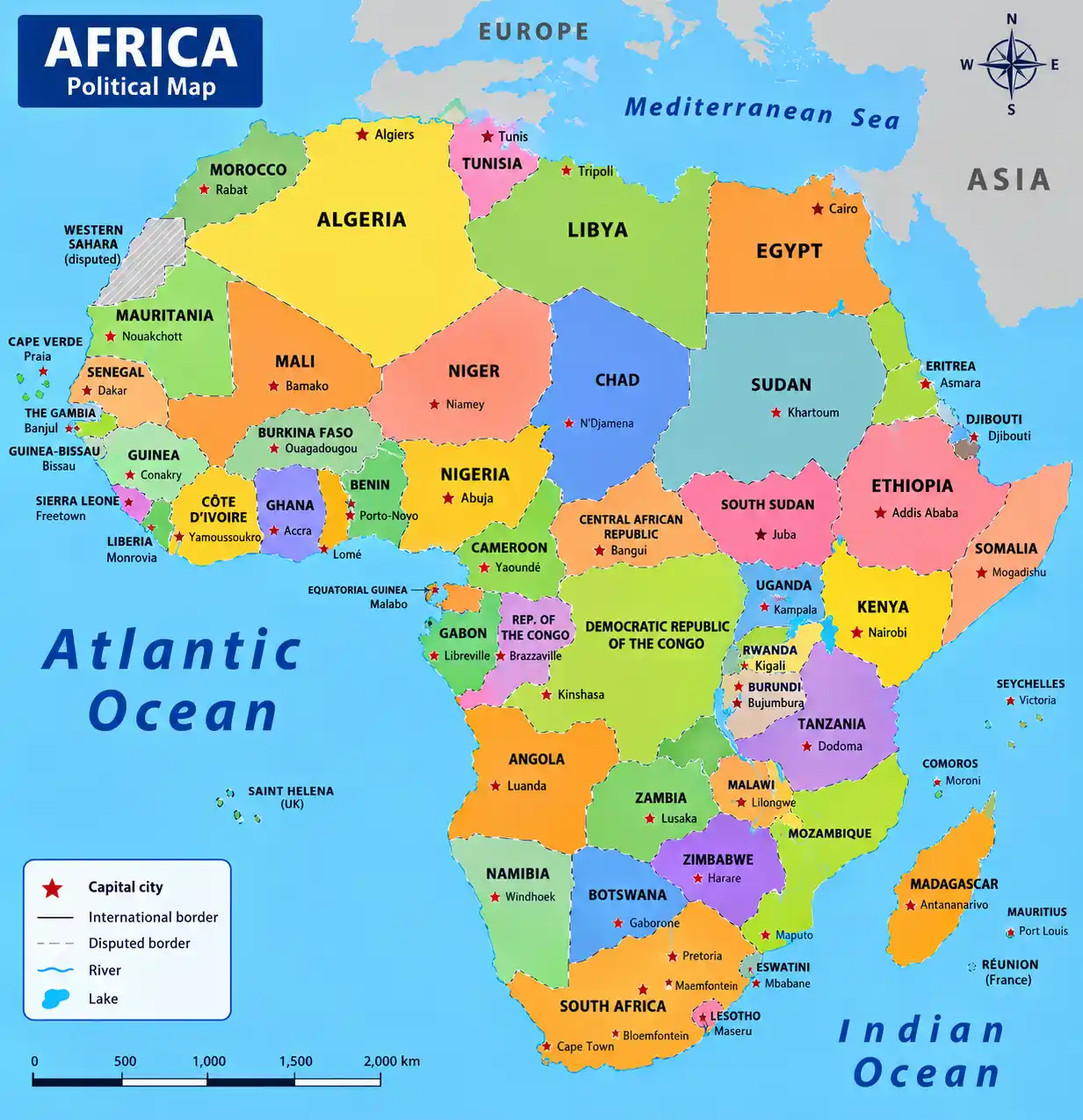
Africa
Comprehensive overview of the African continent: 54 internationally recognized sovereign countries, updated demographic data, economy, climate mosaic and geopolitics.
Africa is composed of 54 internationally recognized sovereign countries (UN members), plus several entities with limited or no recognition depending on the count: the Sahrawi Arab Democratic Republic (Western Sahara, recognized by part of the international community), Somaliland, and to a lesser extent Moroccan Western Sahara. The African continent covers approximately 30.37 million km², i.e. about 20.3% of the world's emerged land, making it the second largest continent after Asia. The African coastline totals approximately 30,500 km. These nations have about 1.5 billion inhabitants, i.e. about 18% of the world population, and generate about 3% of world GDP (about 3,100 billion dollars nominal).
Africa is the youngest continent in the world: the median age is about 19 years, compared with 44.5 years in the European Union and 38.5 years in North America. Its population should reach 2.5 billion inhabitants in 2050 according to UN projections, then exceed 4 billion by 2100, which would make it the most populous continent in the world. Egypt is considered a transcontinental African country: the Sinai Peninsula, located east of the Suez Canal, belongs geographically to Asia, but Cairo, an African capital, concentrates most of the country's political and economic power. The Sahara, the largest hot desert in the world with 9.2 million km², alone covers nearly 30% of the continent's area, while the Sahel, the semi-arid strip bordering it to the south, is one of the areas most vulnerable to climate change on the planet.
North Africa
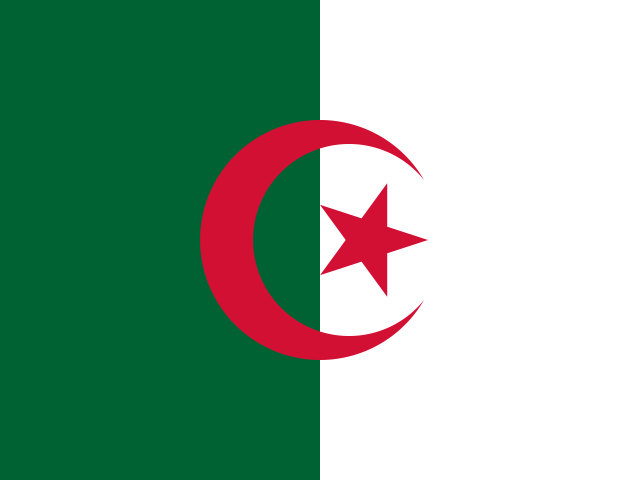 Algeria
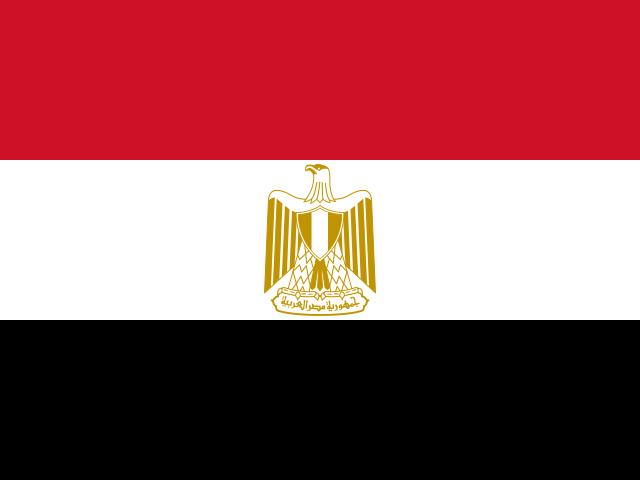 Egypt
Egypt
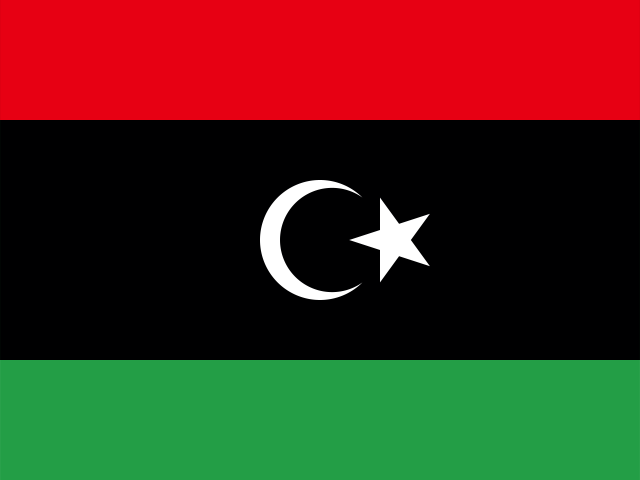 Libya
Libya
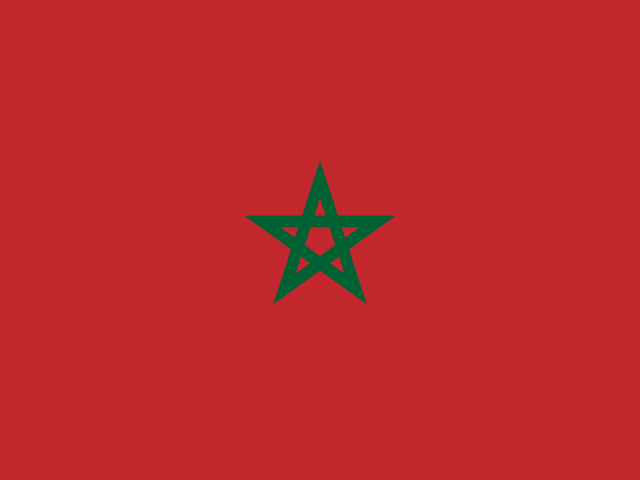 Morocco
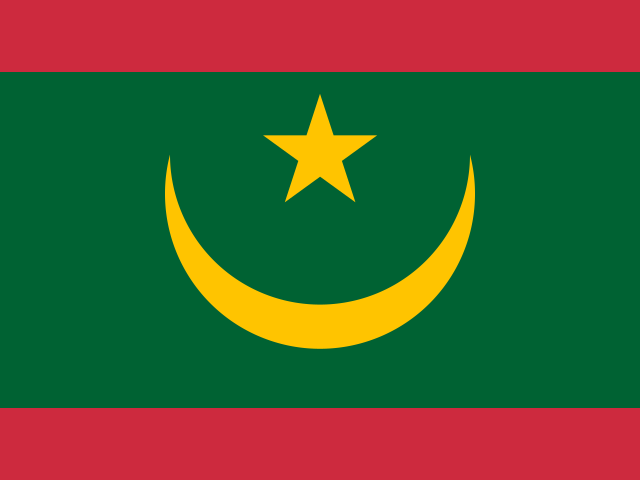 Mauritania
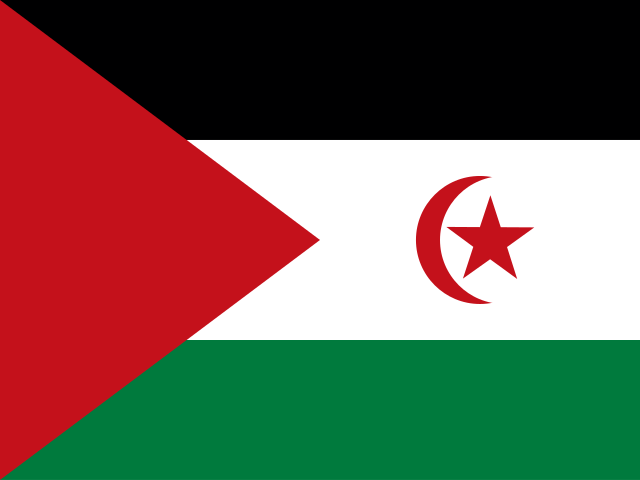 Western Sahara ¹
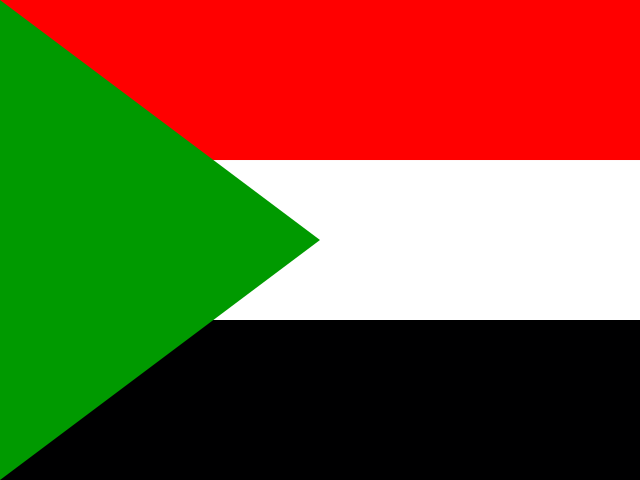 Sudan ⚠️ active conflict
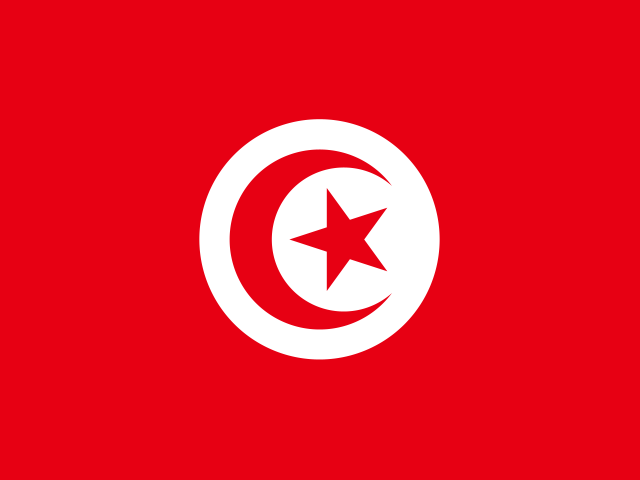 Tunisia
West Africa
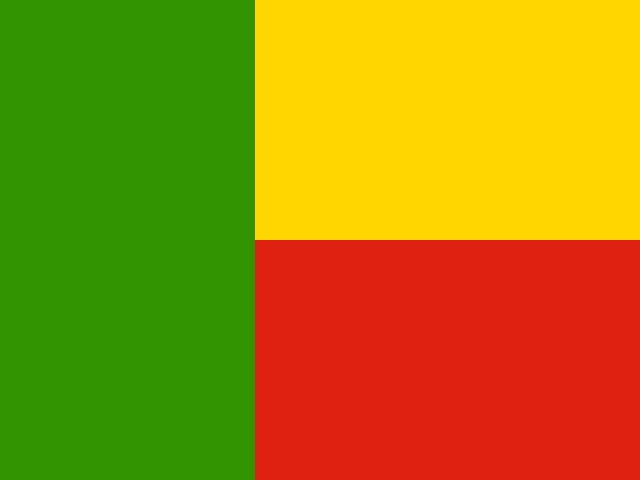 Benin
Benin
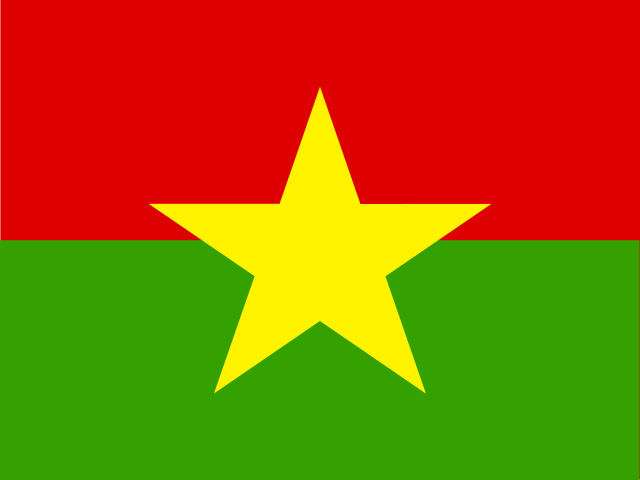 Burkina Faso
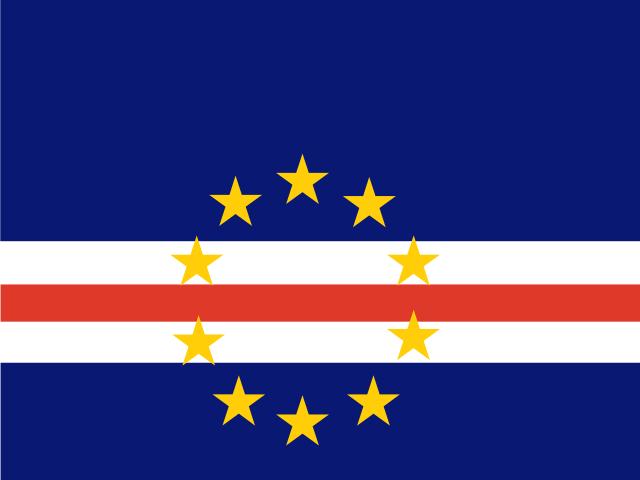 Cape Verde
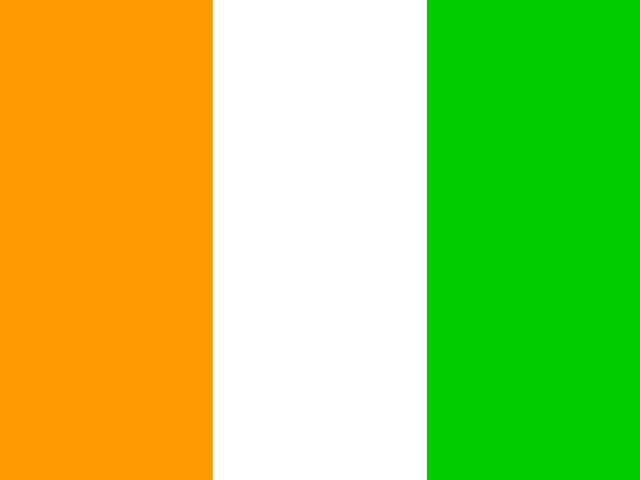 Ivory Coast
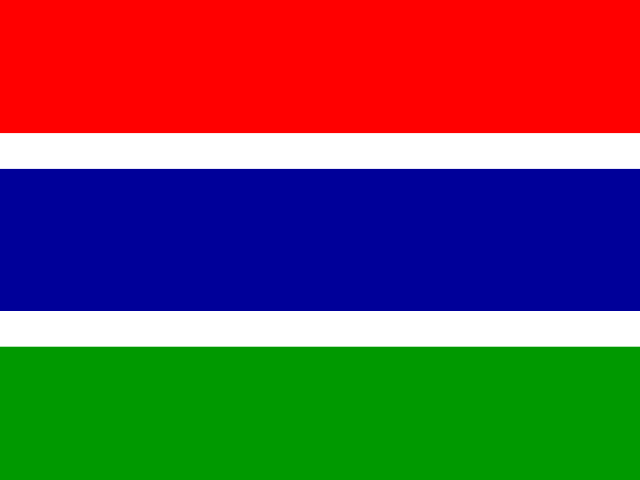 Gambia
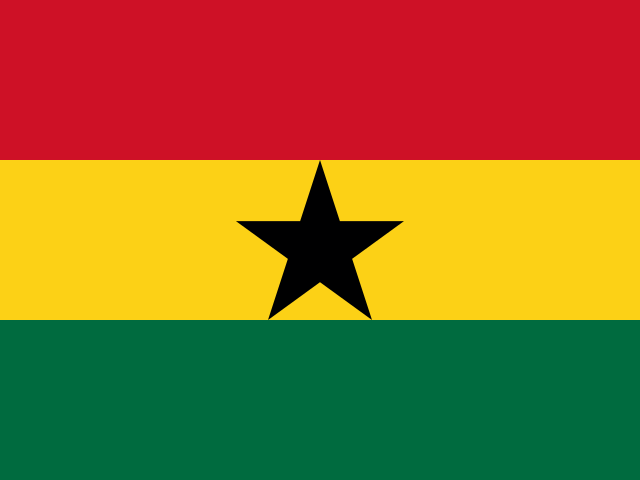 Ghana
Ghana
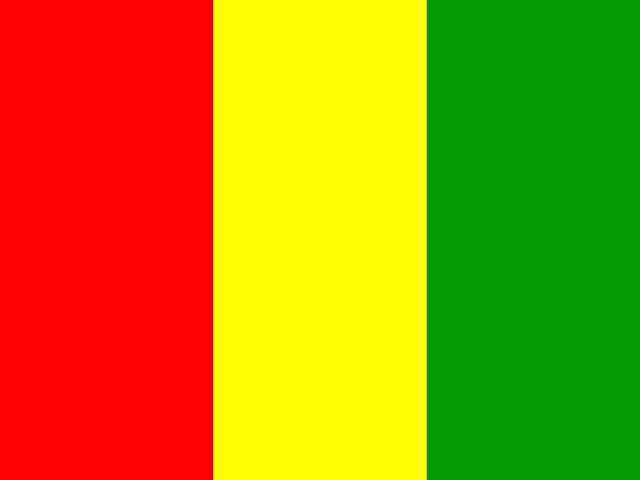 Guinea
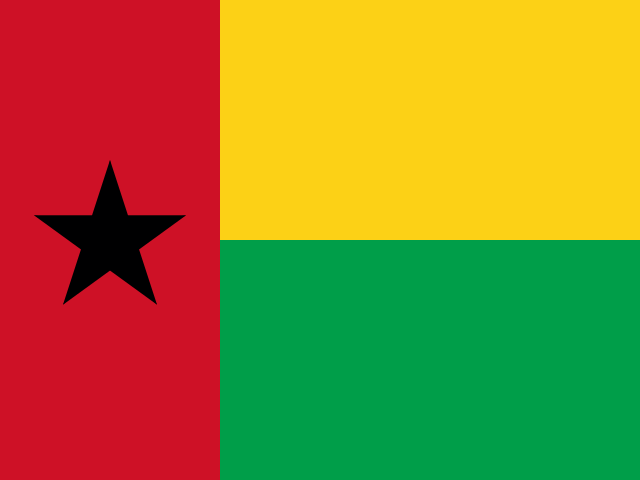 Guinea-Bissau
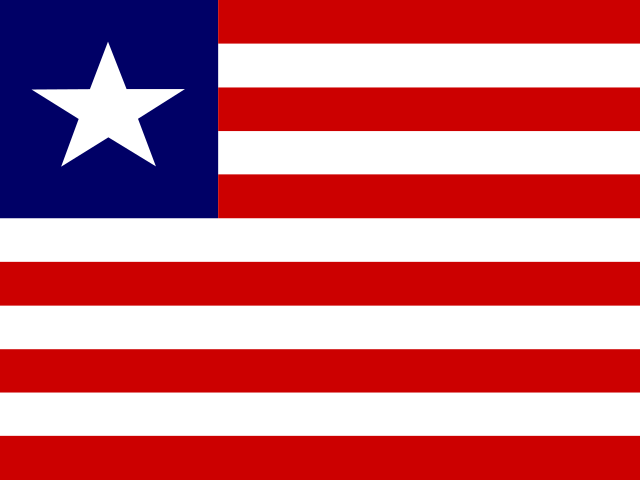 Liberia
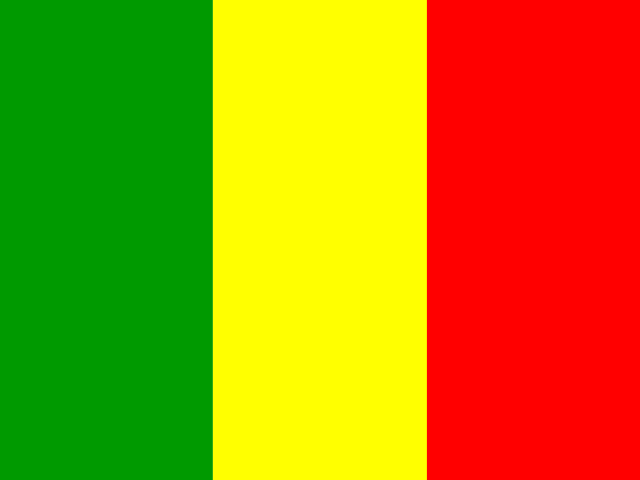 Mali ⚠️ active conflict
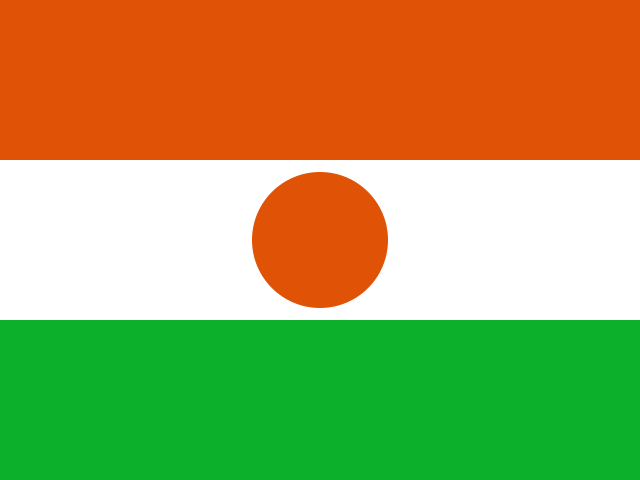 Niger
Niger
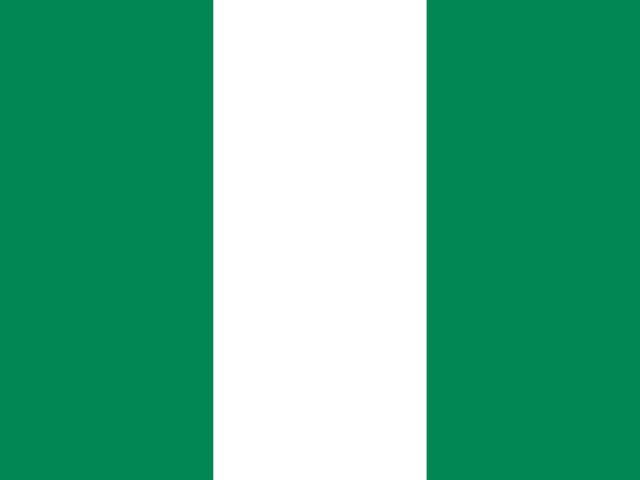 Nigeria
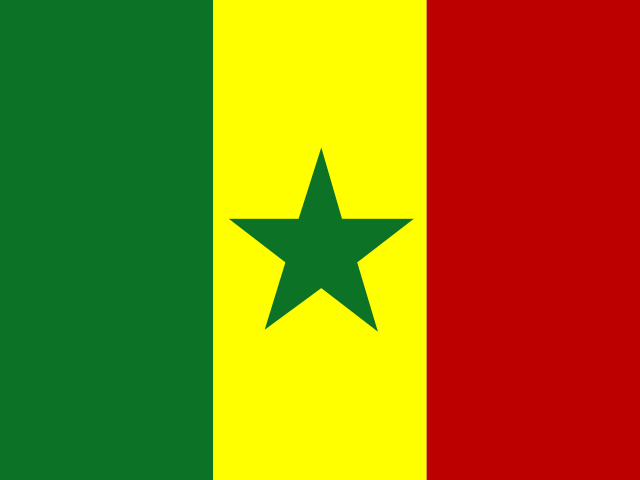 Senegal
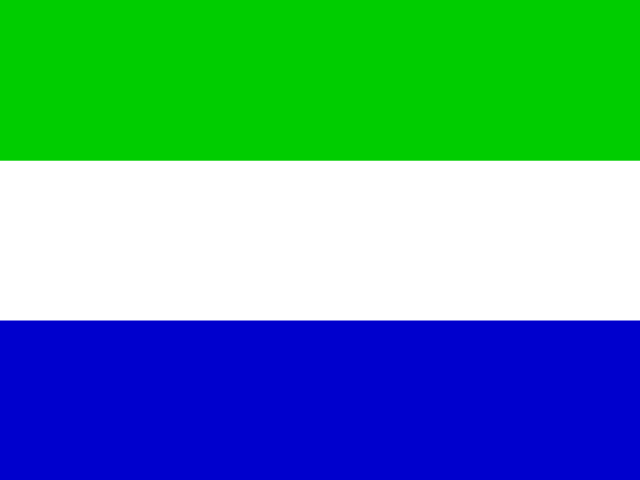 Sierra Leone
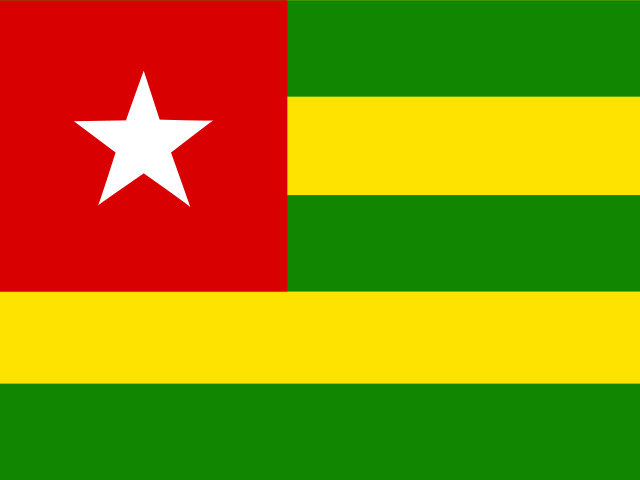 Togo
Togo
Central Africa
 Angola
 Cameroon
 Central African Republic
 Congo
Congo
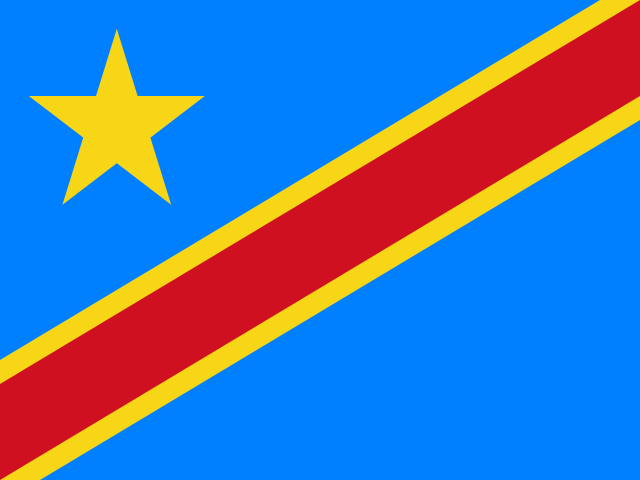 DR Congo ⚠️ active conflict
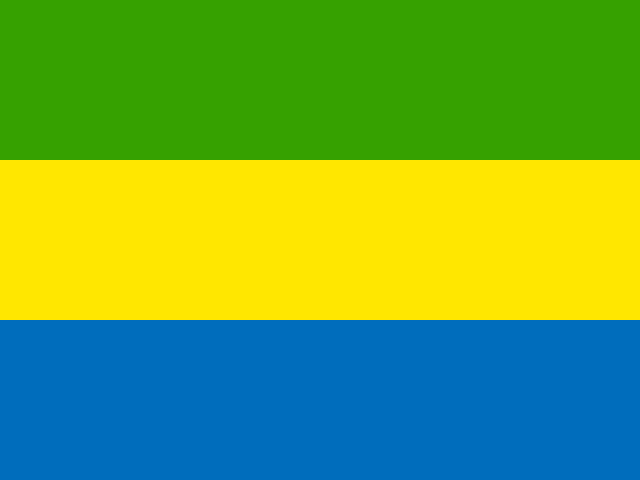 Gabon
Gabon
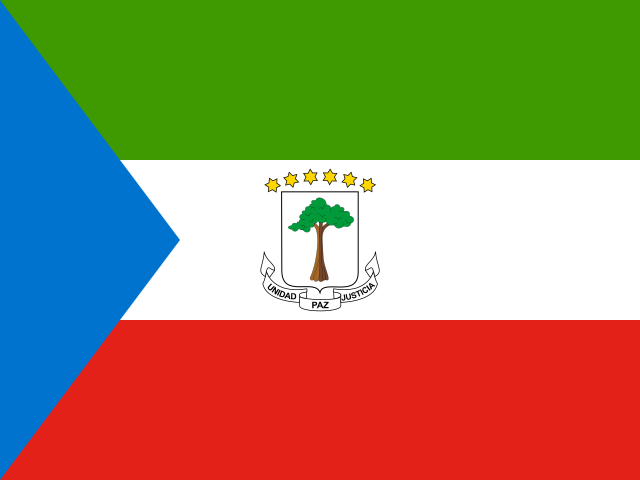 Equatorial Guinea
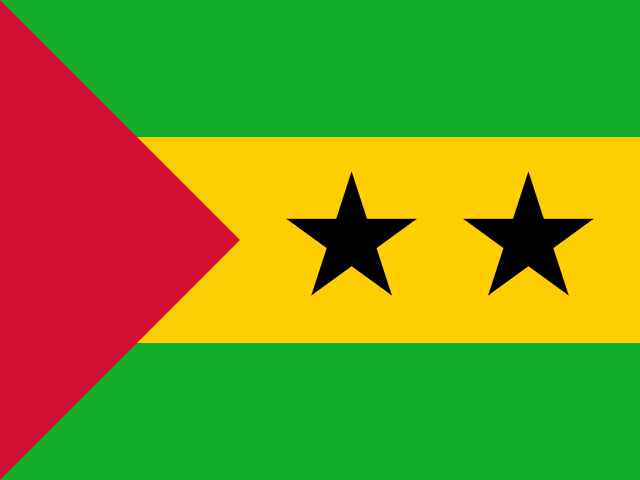 São Tomé and Príncipe
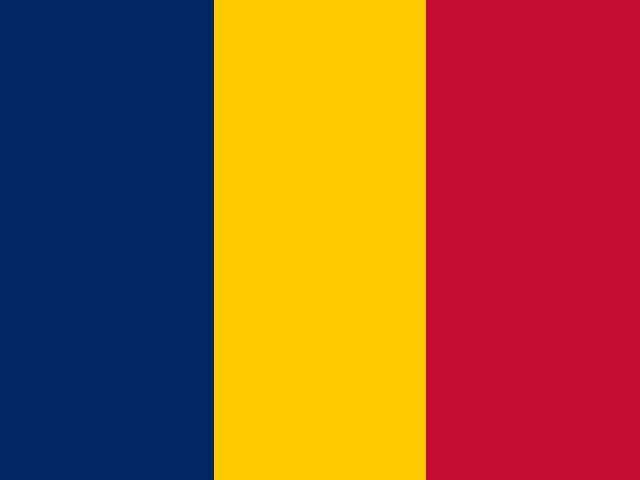 Chad
Chad
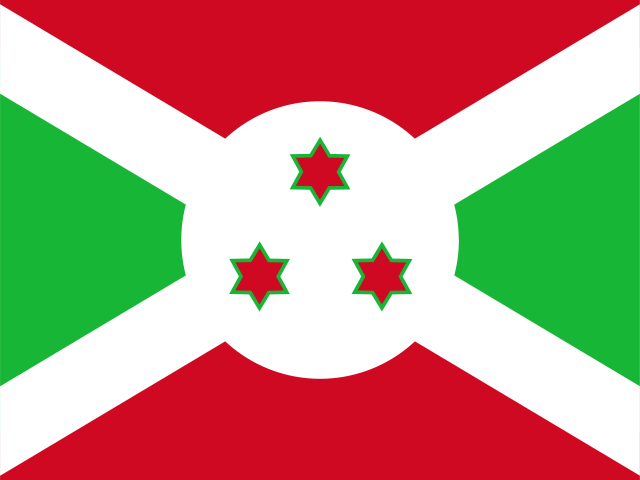 Burundi
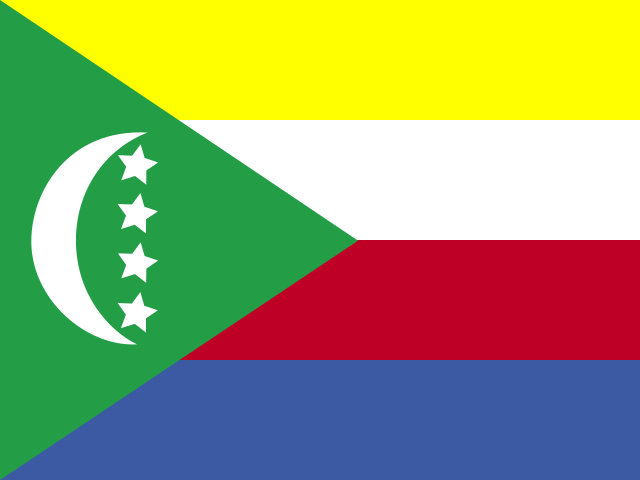 Comoros
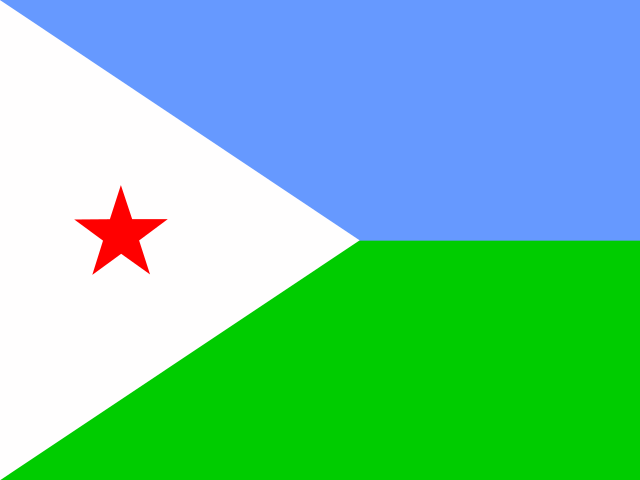 Djibouti
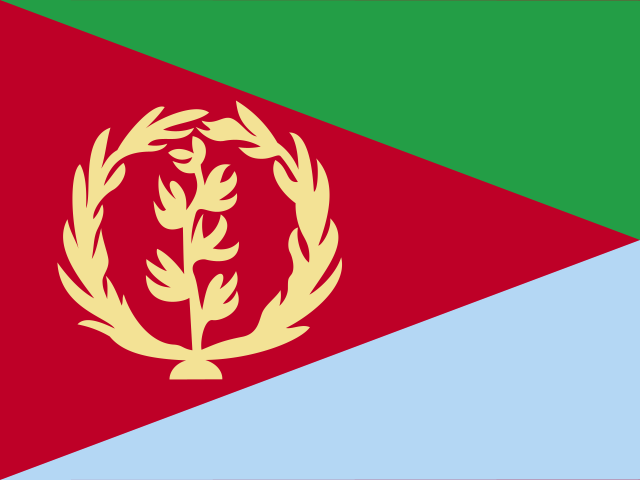 Eritrea
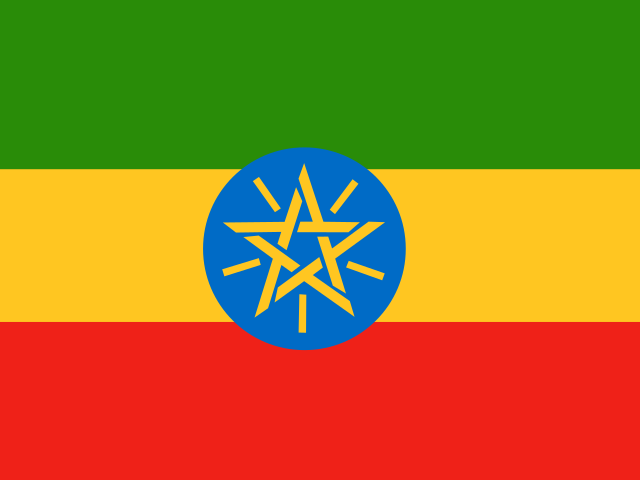 Ethiopia
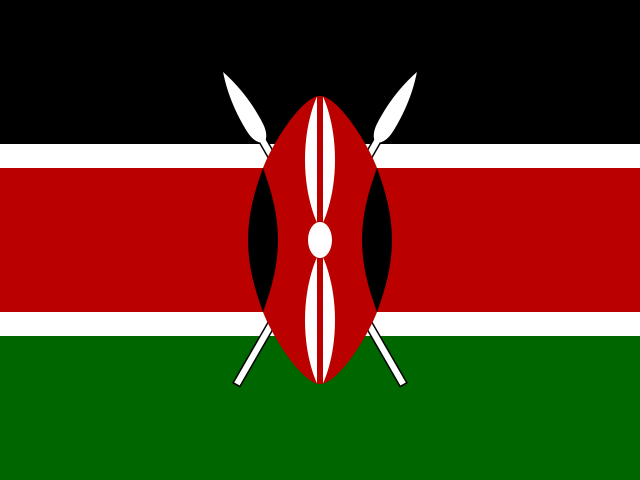 Kenya
Kenya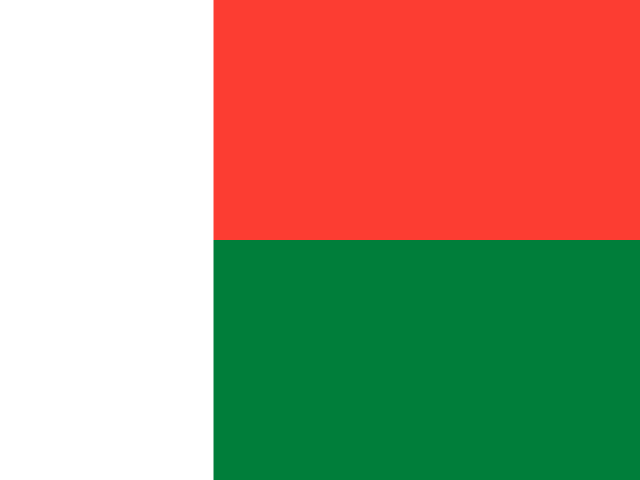 Madagascar
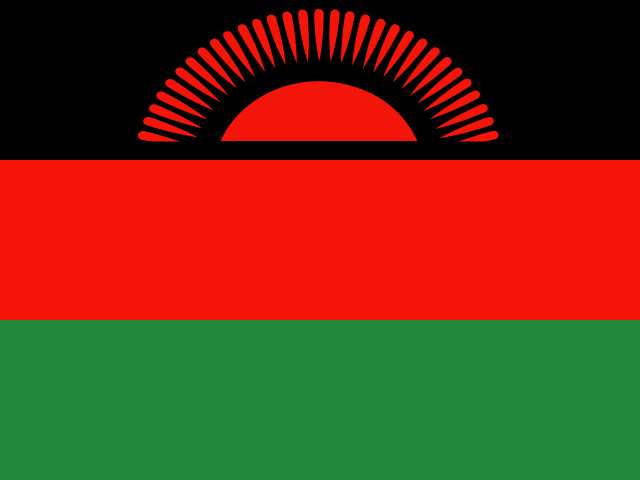 Malawi
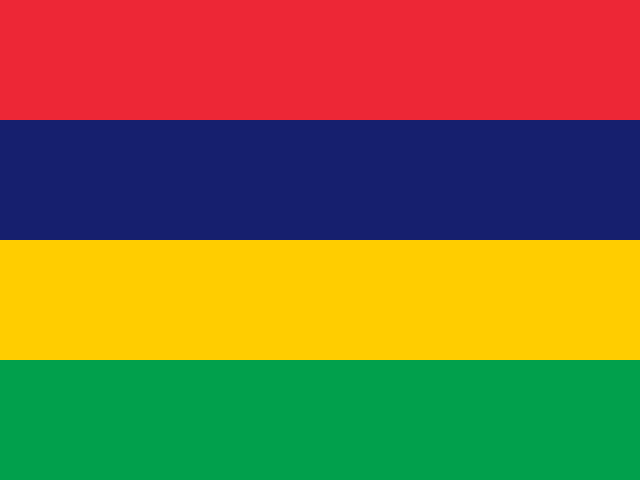 Mauritius
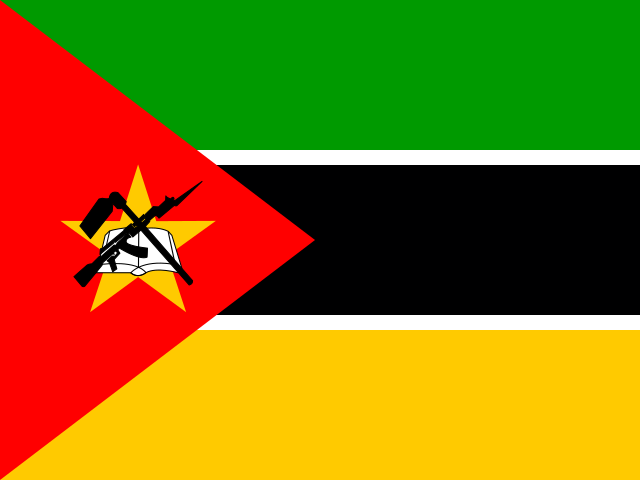 Mozambique
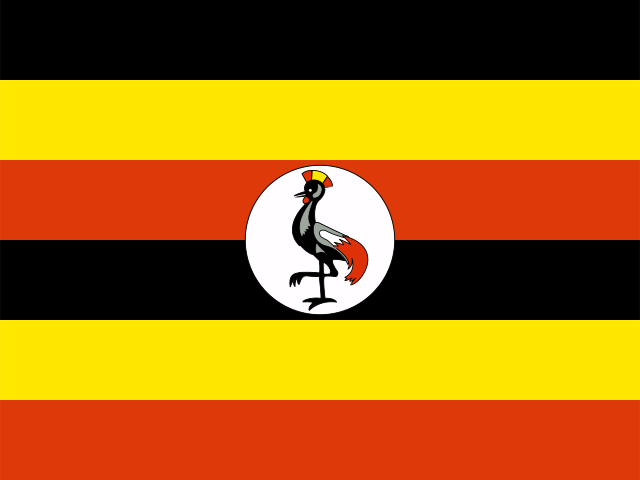 Uganda
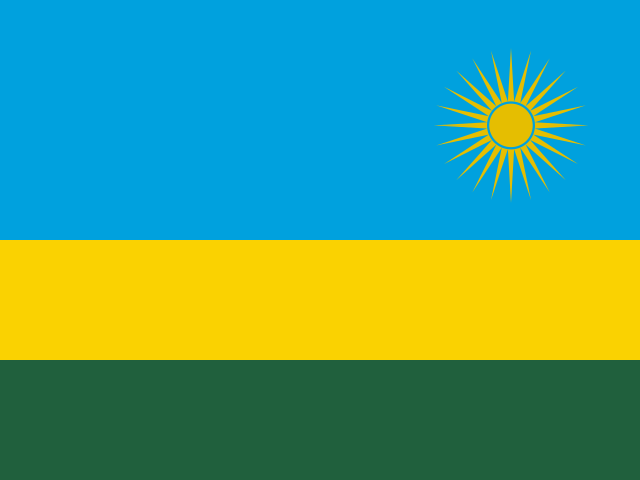 Rwanda
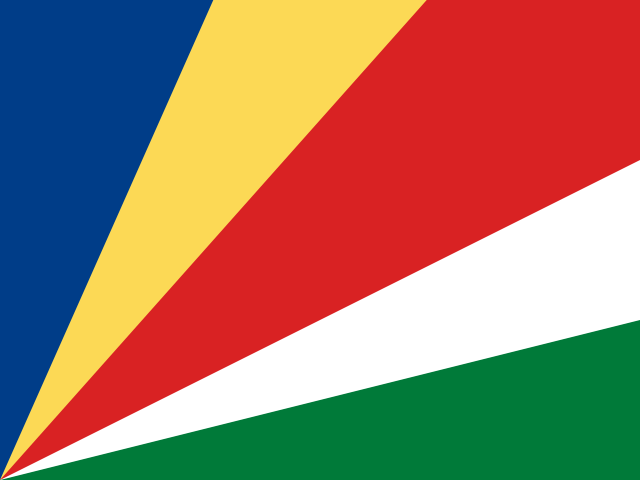 Seychelles
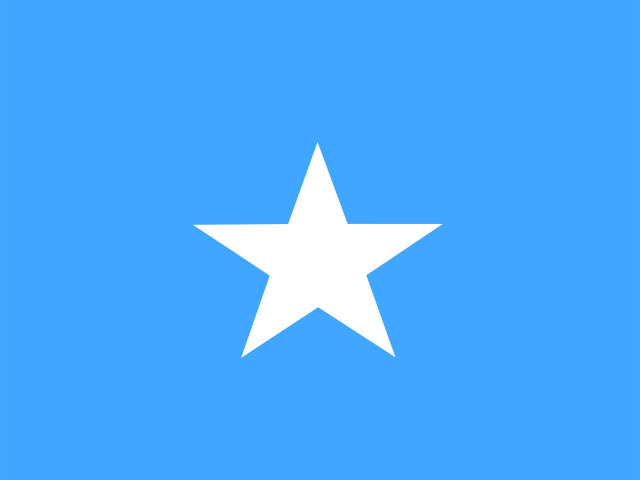 Somalia
 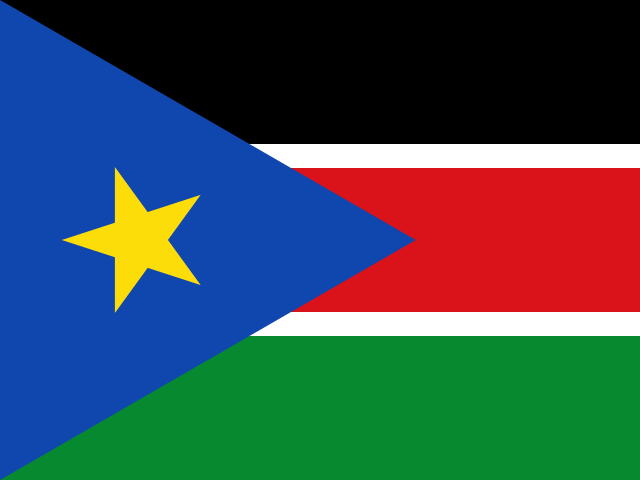 South Sudan
 Tanzania
 South Africa
 Botswana
 Eswatini
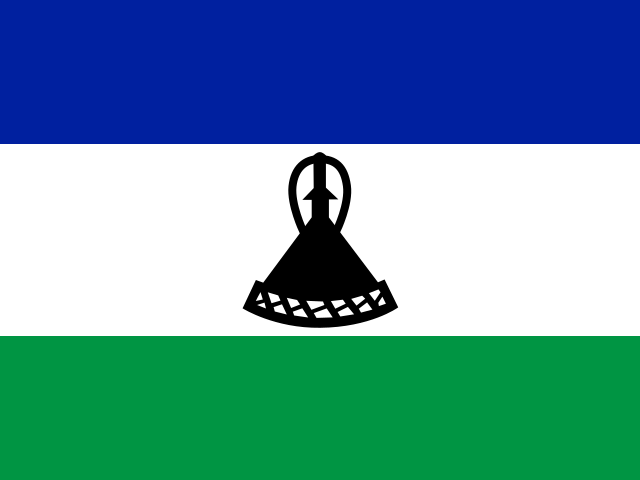 Lesotho
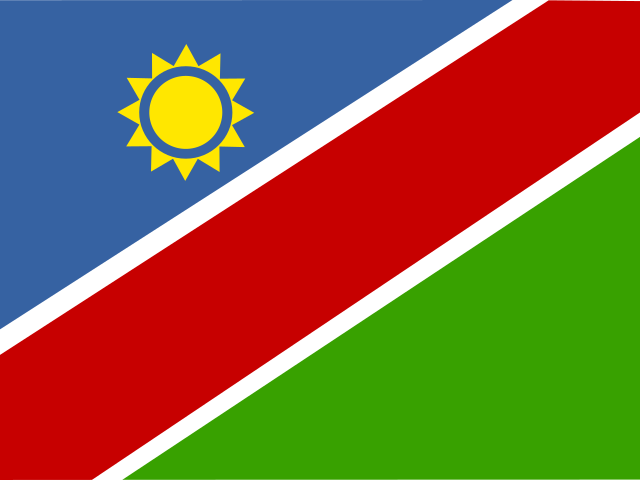 Namibia
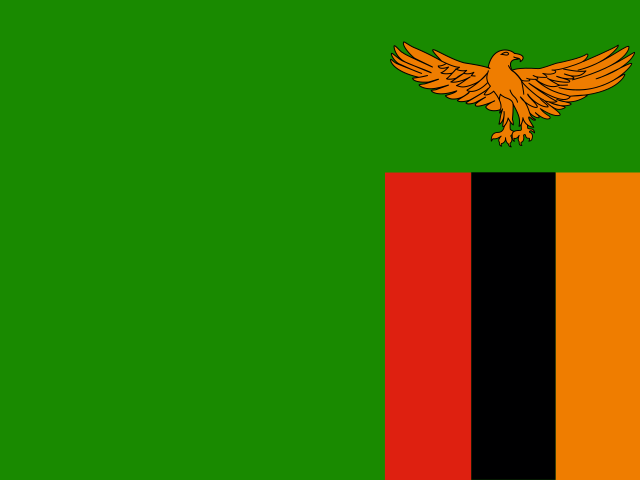 Zambia
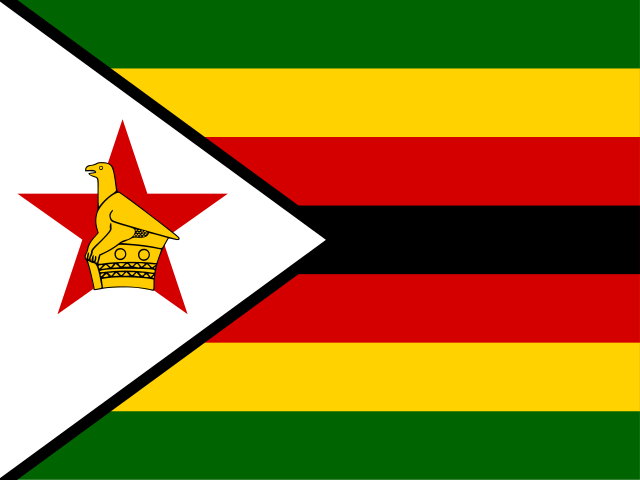 Zimbabwe
African state alliances and trade agreements
- AU - African Union
- AfCFTA - African Continental Free Trade Area
- ECOWAS - Economic Community of West African States
- SADC - Southern African Development Community
- EAC - East African Community
- COMESA - Common Market for Eastern and Southern Africa
- ECCAS - Economic Community of Central African States
- CEMAC - Central African Economic and Monetary Community
- AMU - Arab Maghreb Union
- IGAD - Intergovernmental Authority on Development
- CEN-SAD - Community of Sahel-Saharan States
- WAEMU - West African Economic and Monetary Union
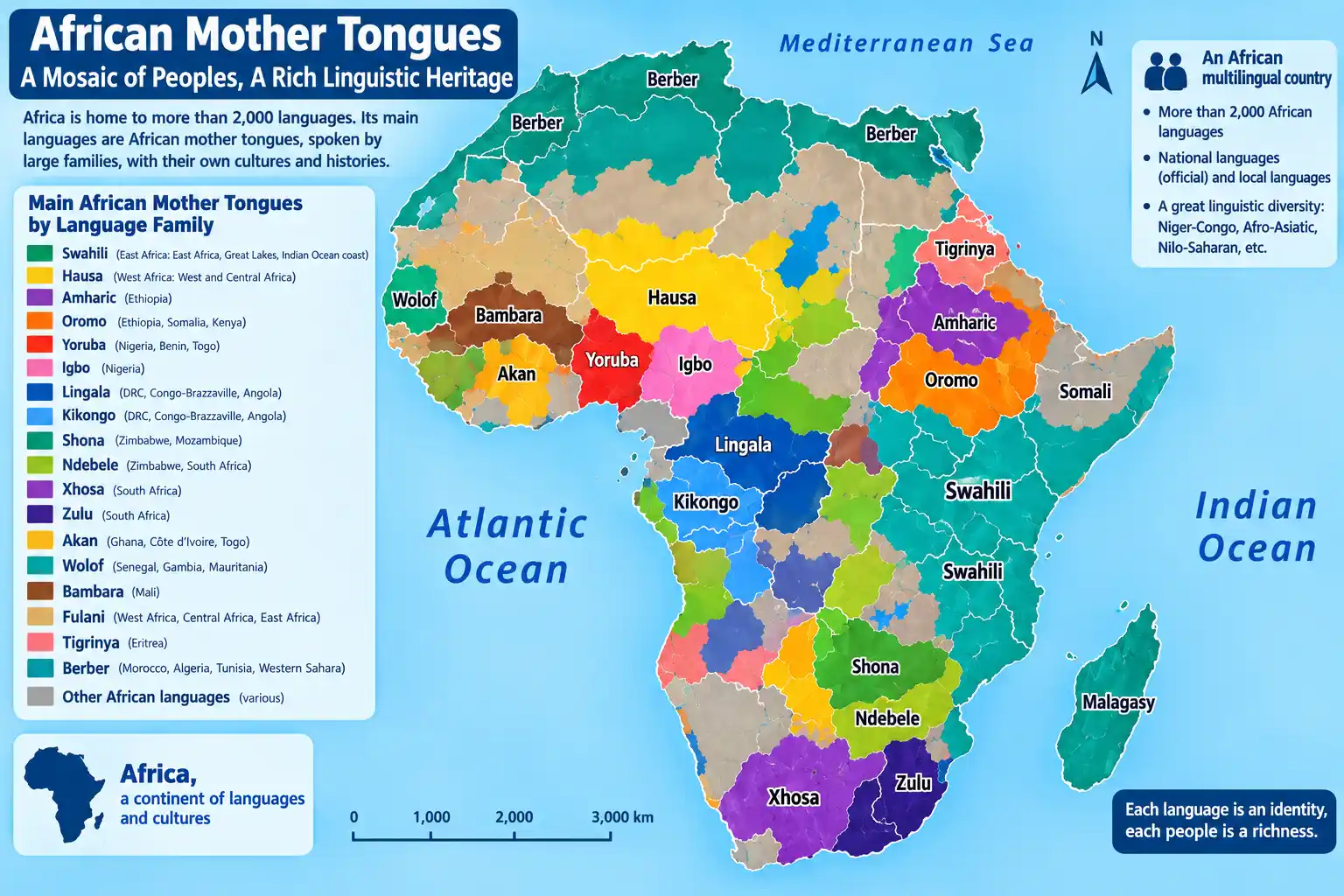
Most spoken native languages in Africa
| Language | Share of Africans | Native speakers (millions) |
|---|---|---|
| Arabic | 11.3% | 170 million |
| Hausa | 3.7% | 55 million |
| Yoruba | 3.0% | 45 million |
| Oromo | 2.5% | 37 million |
| Amharic | 2.3% | 35 million |
| Igbo | 2.0% | 30 million |
| Berber (Tamazight) | 1.7% | 25 million |
| Fula (Fulfulde) | 1.7% | 25 million |
| Malagasy | 1.7% | 25 million |
| Swahili | 1.3% | 20 million |
| Somali | 1.3% | 20 million |
| Lingala | 1.0% | 15 million |
| Zulu | 0.8% | 12 million |
| Shona | 0.7% | 11 million |
| Afrikaans | 0.5% | 7 million |
Africa is the most multilingual continent on the planet with more than 2,000 languages recorded, divided into four main families: Afro-Asiatic (Arabic, Berber, Hausa, Amharic, Oromo, Somali), Niger-Congo (Swahili, Yoruba, Igbo, Zulu, Lingala, Shona — the largest language family in the world by number of languages), Nilo-Saharan (Kanuri, Dinka, Luo) and Khoisan (click languages of Southern Africa). In addition to these indigenous languages, there are the colonial languages that have become official or working languages: French (21 countries), English (23 countries), Portuguese (6 countries), Spanish (Equatorial Guinea) and Arabic. The main religions follow a marked geographical distribution: Islam dominant in North Africa, the Sahel and the Swahili coast, Christianity majority in sub-Saharan Africa (Catholicism, Protestantism, independent African churches, Orthodoxy in Ethiopia and Eritrea), and traditional African religions still very present, often practiced in parallel.
Population and density in Africa
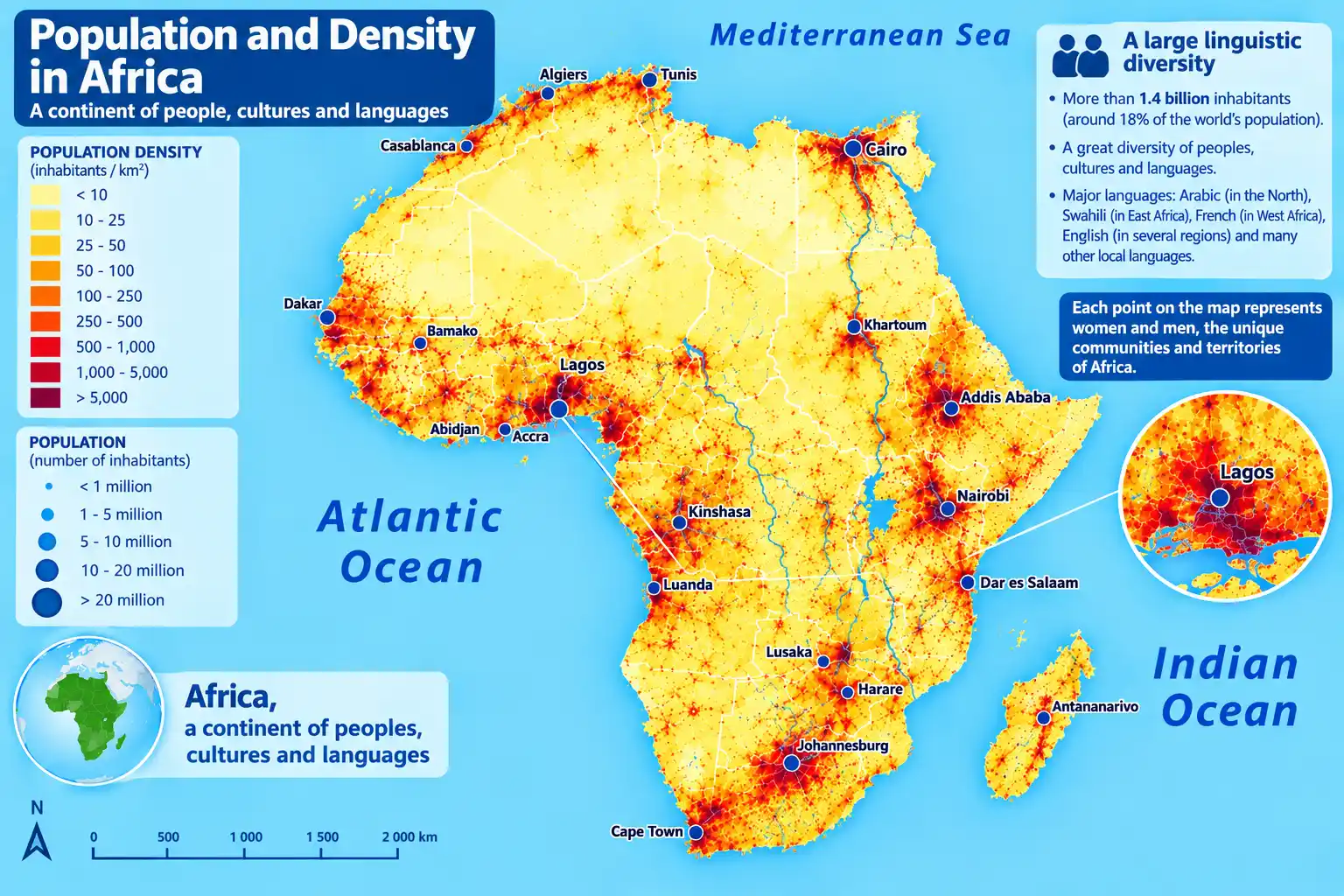
With about 1.5 billion inhabitants, Africa is the second most populous continent in the world after Asia. Its average density remains moderate, around 45 to 50 inhabitants per km², but it masks extreme contrasts: the Sahara and Kalahari deserts are virtually empty, while certain regions of the Great Lakes, the Nile Delta and the Gulf of Guinea are among the most densely populated on the planet. About 44% of Africans live in cities, a proportion that should exceed 60% by 2050, driven by one of the fastest urbanization rates in the world (Lagos, Kinshasa, Cairo, Dar es Salaam, Johannesburg).
Mauritius: (626 inhabitants/km²),
Rwanda: (525 inhabitants/km²),
Comoros: (465 inhabitants/km²),
Burundi: (460 inhabitants/km²),
Uganda: (250 inhabitants/km²),
Nigeria: (226 inhabitants/km²),
Malawi: (221 inhabitants/km²).
Conversely, the lowest densities on the continent are found in desert and equatorial zones: Namibia (3 inhab/km²), Botswana (4 inhab/km²), Libya (4 inhab/km²), Mauritania (5 inhab/km²), Gabon (9 inhab/km²) and Chad (13 inhab/km²). Nigeria, with about 230 million inhabitants, is the most populous country in Africa ahead of Ethiopia (≈130 million), Egypt (≈110 million) and the DR Congo (≈105 million). These four countries alone concentrate nearly 40% of the African population. Africa also has the youngest population in the world: about 40% of Africans are under 15, and half are under 20.
African demographics
With a median age of about 19 years, Africa is by far the youngest continent in the world, ahead of Asia (32 years), North America (38.5 years) and Europe (44.5 years). This demographic structure is unique: more than 60% of the African population is under 25, and the continent will have more than 830 million additional young workers by 2050. This data is structural and will not reverse in the short term.
The average fertility rate in Africa is 4.2 children per woman, far above the generational renewal threshold (2.1) and the world level (2.3). The most fertile countries are Niger (6.6), Somalia (6.3), Chad (6.1), the DR Congo (6.1) and Mali (5.9). The least fertile are Mauritius (1.4), the Seychelles (1.5), Tunisia (1.7), Algeria (2.5) and Morocco (2.3).
Unlike Europe, Africa does not need immigration to maintain its population: its natural growth is the highest in the world, with an average annual growth rate of about 2.4%. The continent gains about 35 to 40 million inhabitants per year. At the same time, it also experiences net emigration to Europe, the Persian Gulf and North America, estimated at about 1 to 2 million people per year, as well as significant intra-African flows (to South Africa, Ivory Coast, Kenya and the Maghreb countries).
The demographic transition is underway but very uneven: it is already advanced in North Africa and Southern Africa, while it is barely beginning in Central Africa and the Sahel. This dynamic explains why Africa should go from 18% of the world population today to nearly 40% in 2100.
📊 Summary demographic table of Africa
| Indicator | Value |
|---|---|
| Total population (54 countries) | 1.5 billion |
| Median age | 19.7 years |
| Fertility rate | 4.2 children / woman |
| Infant mortality rate | ≈ 45 ‰ |
| Life expectancy | 64.5 years (men: 62.4 - women: 66.6) |
| Population aged 65 and over | 3.5 % |
| Population aged 0-14 | 40.2 % |
Time zones in Africa
Africa extends over 6 main time zones, from the Atlantic to the Indian Ocean:
- UTC−1 (Cape Verde Time): Cape Verde.
- UTC±0 (GMT - West Africa Time): Burkina Faso, Ivory Coast, Gambia, Ghana, Guinea, Guinea-Bissau, Liberia, Mali, Mauritania, São Tomé and Príncipe, Senegal, Sierra Leone, Saint Helena.
- UTC+1 (WAT - Central Africa and Maghreb Time): Algeria, Angola, Benin, Cameroon, Congo, Gabon, Equatorial Guinea, Morocco, Niger, Nigeria, CAR, DR Congo (Kinshasa), Chad, Tunisia.
- UTC+2 (CAT - Central Southern Africa Time): South Africa, Botswana, Burundi, Egypt, Eswatini, Lesotho, Libya, Malawi, Mozambique, Namibia, Rwanda, Sudan, South Sudan, Zambia, Zimbabwe.
- UTC+3 (EAT - East Africa Time): Comoros, Djibouti, Eritrea, Ethiopia, Kenya, Madagascar, Mayotte, Uganda, Somalia, Tanzania.
- UTC+4 (Indian Ocean Time): Mauritius, Seychelles, Réunion.
Special cases and exceptions: Egypt reinstated daylight saving time in 2023 after seven years of interruption. Morocco remains on UTC+1 all year round, except during the month of Ramadan when the country returns to UTC+0. Libya also reinstated daylight saving time in 2013. Namibia abandoned daylight saving time in 2017 to remain permanently on UTC+2. Finally, the DR Congo covers two time zones (UTC+1 in Kinshasa and UTC+2 in Katanga and Kasaï), as do Algeria and Mali, which do not apply any seasonal change.
African institutions
African geology and geography
From a geological point of view, Africa is the ancient heart of the Gondwana supercontinent. It rests mainly on the African plate, which extends from the South Atlantic to the Red Sea and the Indian Ocean, and which is moving northeast at a speed of about 2.15 cm per year. This dynamic is at the origin of the Great Rift Valley, an immense continental fracture of nearly 6,000 km crossing the continent from Djibouti to Mozambique and which, in time, should separate the Horn of Africa from the rest of the continent. The collision of the African plate with the Eurasian plate is also responsible for the formation of the Atlas Mountains and Mediterranean volcanism.
The conventional geographical boundary between Africa and Asia is drawn along the Isthmus of Suez and the Suez Canal, east of which lies the Sinai Peninsula (Egyptian). The continent is also bordered by the Mediterranean Sea to the north, the Atlantic Ocean to the west, the Indian Ocean to the east and the Red Sea to the northeast.
Main African geological and geographical features:
- African Craton: Precambrian basement among the oldest in the world (up to 3.6 billion years), outcropping in the Sahara, Southern Africa and Madagascar.
- Great Rift Valley: 6,000 km tectonic trench hosting the great lakes (Tanganyika, Malawi, Turkana, Victoria) and the highest volcanic peaks of the continent.
- Ranges and massifs: Atlas (Morocco, Algeria, Tunisia), Drakensberg (South Africa, Lesotho), Ethiopian highlands, Ahaggar and Tibesti (Sahara).
- Highest points: Kilimanjaro (5,895 m, Tanzania), Mount Kenya (5,199 m), Ruwenzori (5,109 m, Uganda/DR Congo).
- Lowest point: Lake Assal (−155 m, Djibouti), followed by the Qattara Depression (−133 m, Egypt).
- Active volcanism: Nyiragongo and Nyamuragira (DR Congo), Erta Ale and Dallol (Ethiopia), Ol Doinyo Lengai (Tanzania), Mount Cameroon, Piton de la Fournaise (Réunion).
- Hydrology: Nile (6,650 km, longest river in the world), Congo (4,700 km, second largest river basin in the world), Niger (4,200 km), Zambezi (2,574 km, Victoria Falls), Lake Victoria (68,800 km², largest lake in Africa).
Climate in Africa
Africa is the hottest continent in the world: it is crossed by the equator in its middle, by the Tropic of Cancer to the north and the Tropic of Capricorn to the south, giving it a unique climatic symmetry. Five main climatic regimes share the territory, with well-established annual recurrences.
| Climate zone | African climate |
|---|---|
| Equatorial | Hot and humid all year round (24-28°C), abundant rainfall (> 2,000 mm), high cloud cover, no marked dry season (Congo Basin, Gulf of Guinea) |
| Tropical / Sahelian | Two contrasting seasons: rainy season (June-October) and dry season dominated by the harmattan (November-May), 400-1,200 mm, temperatures from 25 to 35°C |
| Desert | Virtually no rainfall (< 100 mm/year), extreme temperature variations (from 0°C at night to over 50°C during the day), high evaporation (Sahara, Namib, Kalahari, Danakil) |
| Mediterranean | Hot and dry summers (25-35°C), mild and wet winters (8-15°C), precipitation concentrated from November to March (Maghreb, Western Cape, Libyan coast) |
| Humid subtropical / mountain | Hot and rainy summers, cool winters; marked altitudinal variations on the Ethiopian highlands, the Ruwenzori, Kilimanjaro and the Drakensberg (possible snow above 4,000 m) |
Weather records in Africa
🔥 Highest temperature officially recorded in Africa: 55.0°C in Kebili (Tunisia), 7 July 1931 (world record disputed, but still the official reference).
🌡️ Hottest place on average per year in the world: Dallol (Ethiopia), with an average annual temperature of 34.4°C.
❄️ Lowest temperature in Africa: −23.9°C in Ifrane (Morocco), 11 February 1935.
🌧️ Rainiest city in Africa: Debundscha (Cameroon) ≈ 10,000 mm/year, one of the wettest spots on the planet.
☀️ Driest regions in Africa: the Sahara and the Namib Desert, with some areas receiving less than 1 mm of rain per year.
🏜️ Largest hot desert in the world: the Sahara, with 9.2 million km², almost the size of the United States.
Energy in Africa
Africa presents a major energy paradox: the continent holds about 8% of the world's oil reserves and 7% of natural gas reserves, as well as one of the highest solar potentials on the planet, yet about 600 million Africans still lack access to electricity, nearly 40% of the population. The average electrification rate of the continent is about 60%, with very strong disparities between the North (over 95%) and rural sub-Saharan Africa (under 30%).
The main African energy models are:
- Oil and gas model: Nigeria (Africa's leading oil producer, ≈ 1.4 million barrels/day), Algeria (natural gas, world's 3rd LNG exporter), Libya, Angola, Egypt (Zohr gas field), Equatorial Guinea, Gabon, Congo and Mozambique (Rovuma gas fields).
- Coal model: South Africa (≈ 85% of its electricity produced from coal, the continent's leading industrialized economy, home to Africa's only nuclear plant, Koeberg).
- Hydropower model: Ethiopia (≈ 90% renewable electricity, driven by the Grand Ethiopian Renaissance Dam on the Blue Nile, 5,150 MW), DR Congo (Inga Dam, potential estimated at over 40,000 MW, largely untapped), Zambia, Mozambique (Cahora Bassa), Uganda and Ghana (Akosombo).
- Modern renewable model (solar, wind, geothermal): Morocco (Noor Ouarzazate solar complex, target of 52% renewables by 2030), Kenya (≈ 45% geothermal in the Rift Valley, Lake Turkana wind farm), South Africa (REIPPPP programme, over 6 GW of solar and wind installed), Egypt (Benban solar park, 1.8 GW), Senegal, Mauritania and Namibia (green hydrogen projects).
 United States
 Canada
 China
China India
India Japan
Japan South Korea
 Turkey
 Saudi Arabia
 Iran
Iran France
 Germany
 Italy
Italy United Kingdom
 Spain
Spain Ukraine
 Russia
 Netherlands
 Belgium
 Switzerland
 Australia
 New Zealand