
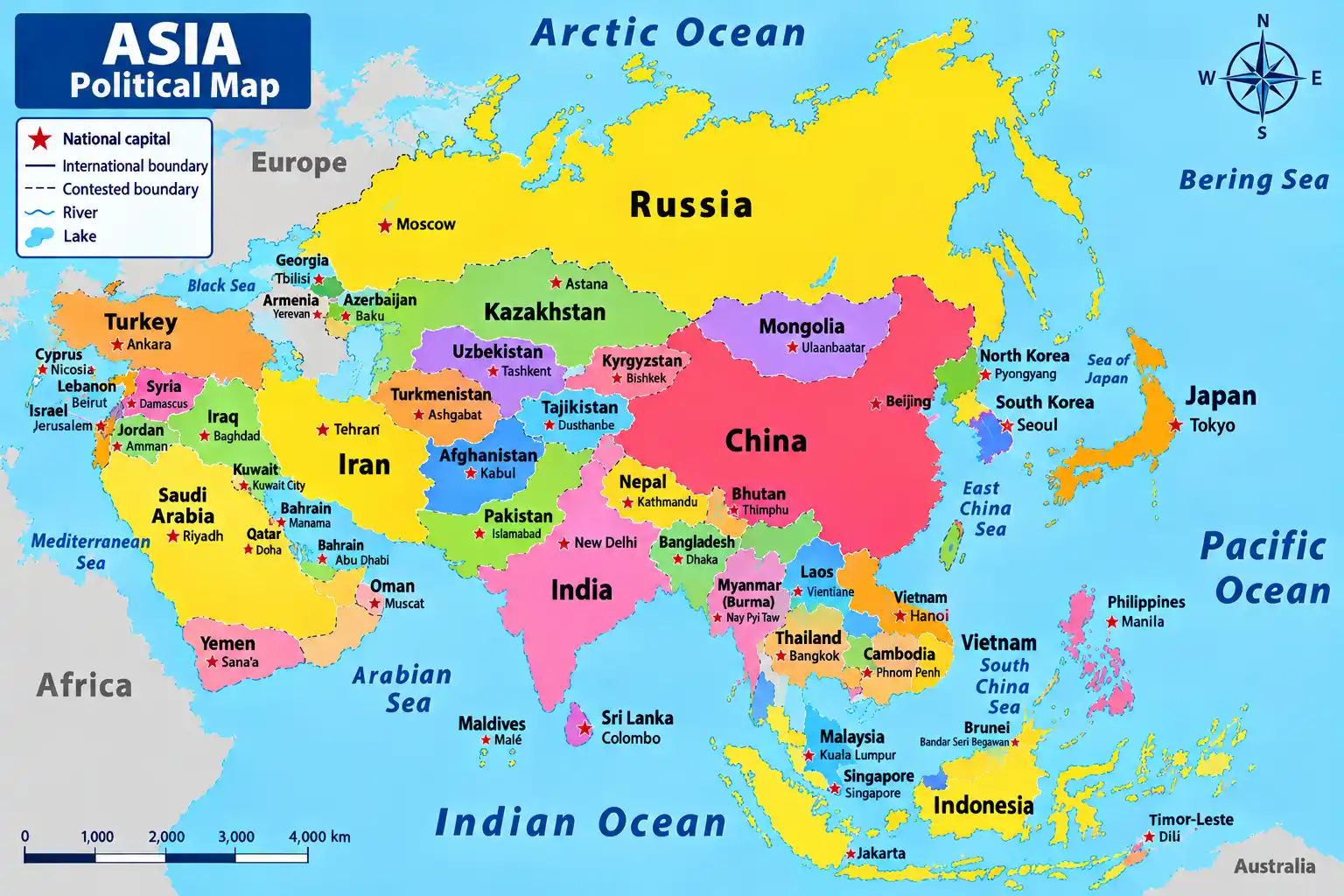
Asia
Comprehensive overview of the Asian continent: 48 internationally recognized sovereign countries, updated demographic data, economy, and climatic and geopolitical mosaic.
Asia is made up of 48 internationally recognized sovereign countries (UN members), plus several entities with limited or no recognition (Taiwan, Abkhazia, South Ossetia, Nagorno-Karabakh, Northern Cyprus, Palestine). The Asian continent covers about 44.58 million km², or roughly 30% of the planet’s land area, making it the largest continent by area. Asia’s coastline totals about 82,000 km. These nations have about 4.7 billion inhabitants, or roughly 60% of the world population, and generate about 40% of global GDP (around $40 trillion nominal).
Asia is the world’s most populous and largest continent. It is home to the two most populous countries on Earth: India (≈1.43 billion inhabitants) and China (≈1.41 billion), which together account for nearly 36% of the world population. The continent is also the birthplace of the world’s major religions (Hinduism, Buddhism, Islam, Christianity, Judaism, Sikhism, Jainism, Taoism, Confucianism, Shinto). The Himalayas contain the world’s highest peaks, including Everest (8,849 m). The Persian Gulf holds the world’s largest oil reserves, and the South China Sea is a major strategic area for global trade.
North Asia
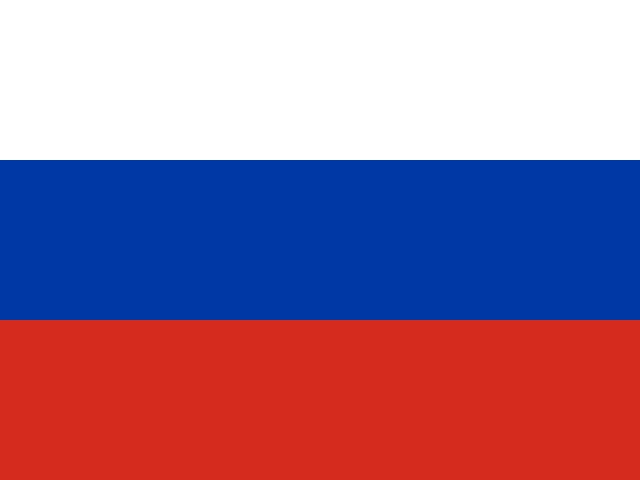 Russia
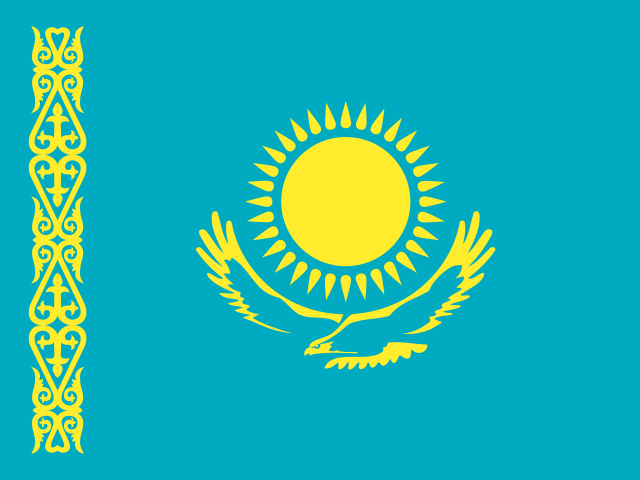 Kazakhstan
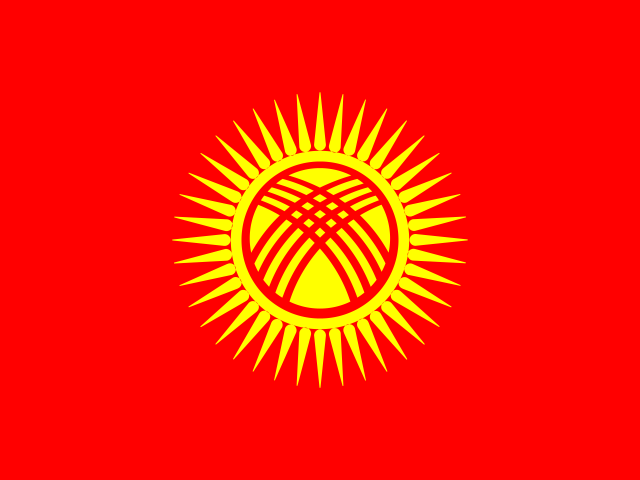 Kyrgyzstan
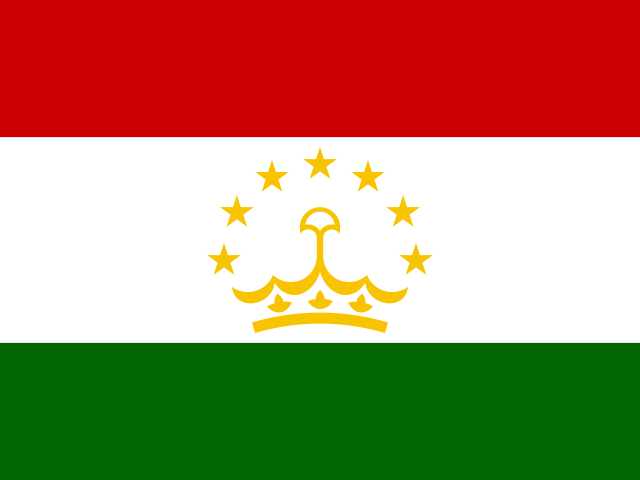 Tajikistan
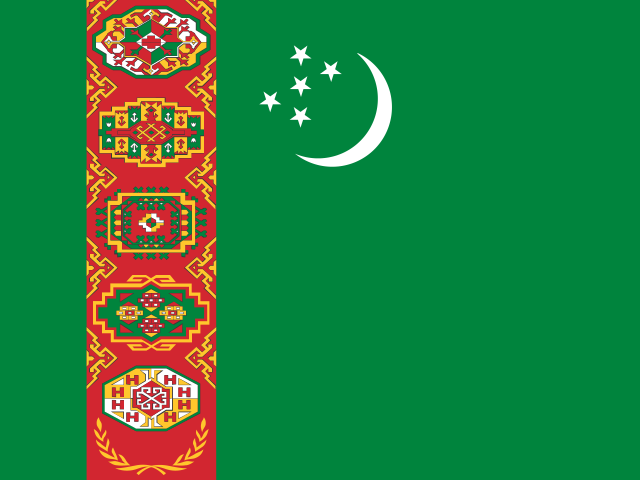 Turkmenistan
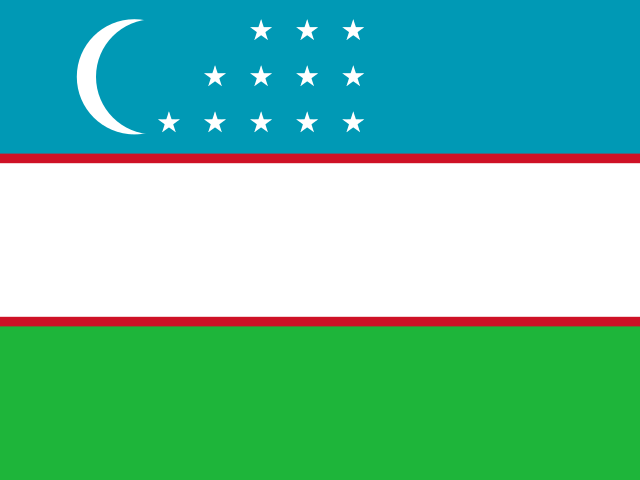 Uzbekistan
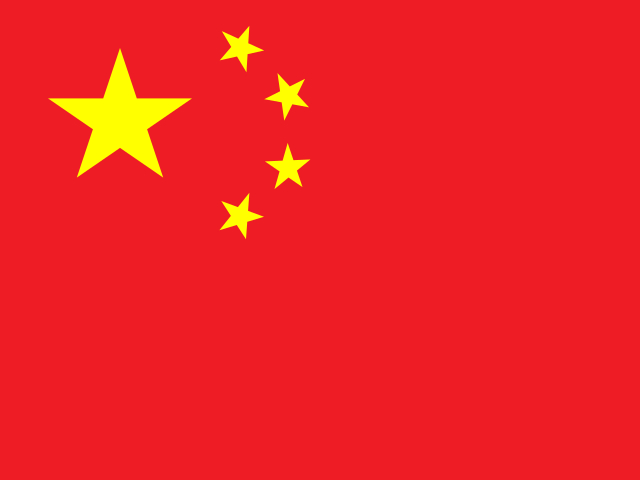 China
China Japan
Japan North Korea
 South Korea
 Mongolia
 Taiwan ¹
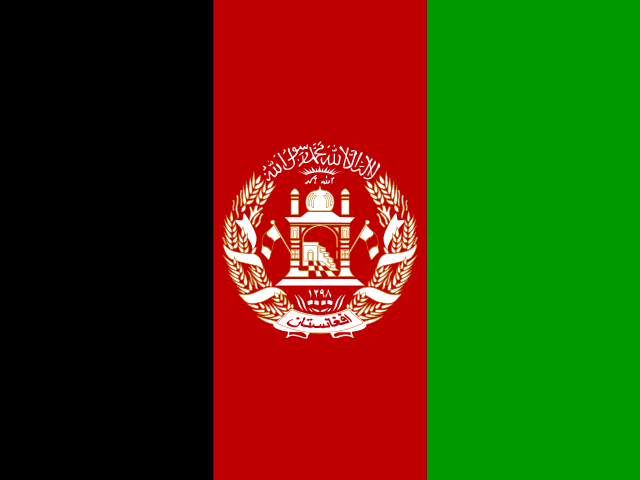 Afghanistan
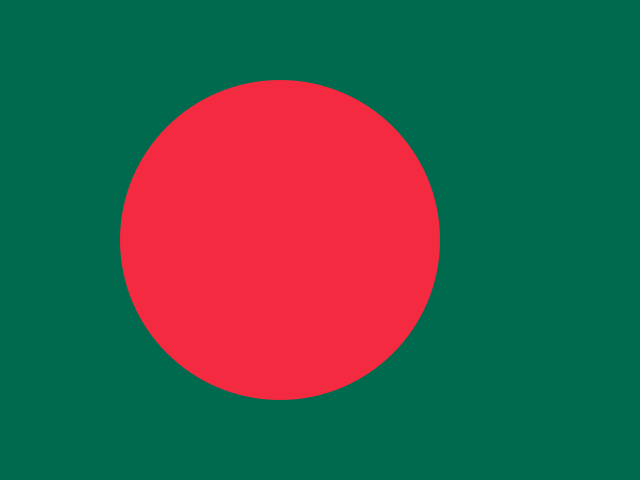 Bangladesh
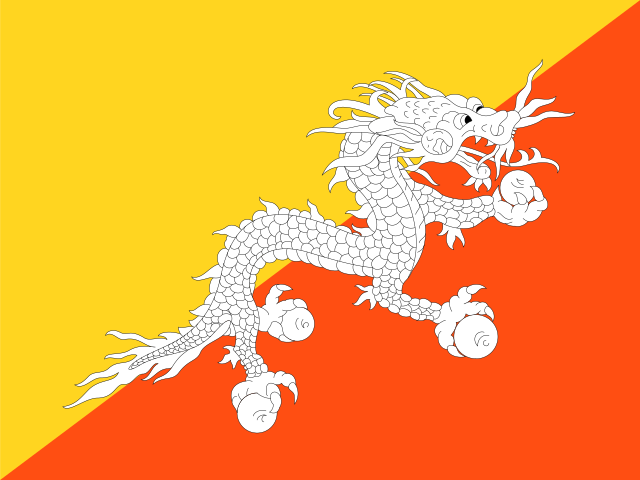 Bhutan
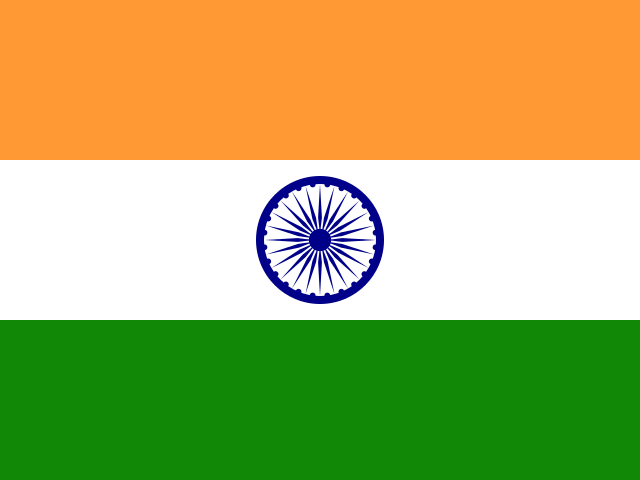 India
India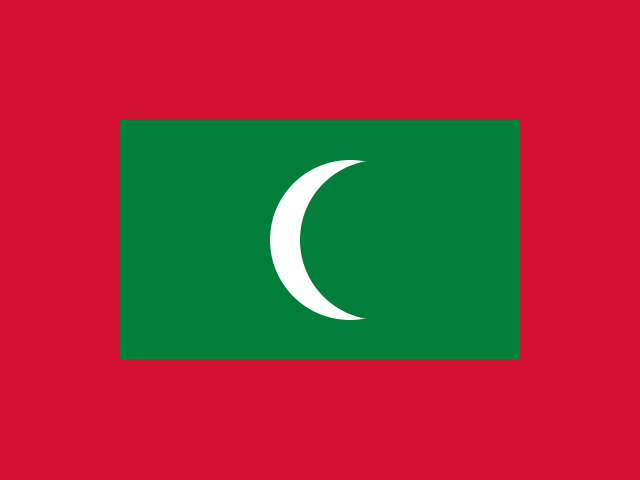 Maldives
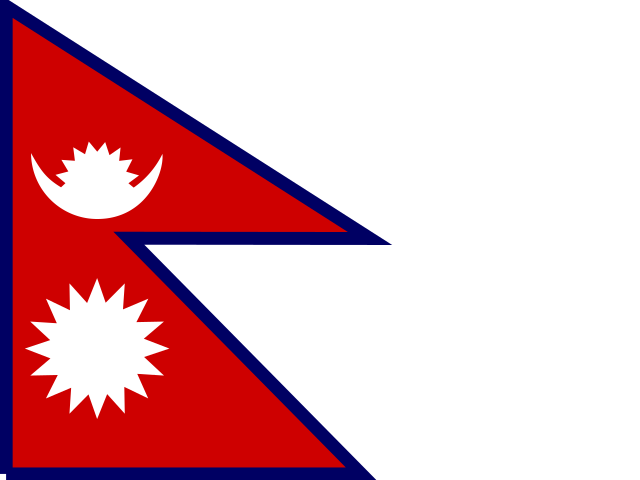 Nepal
Nepal Pakistan
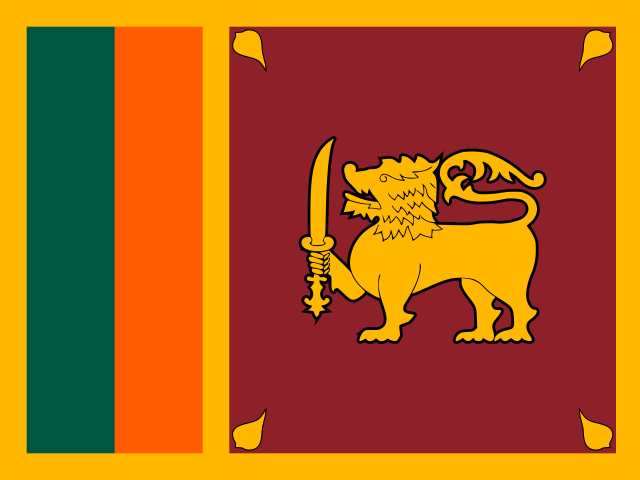 Sri Lanka
Southeast Asia
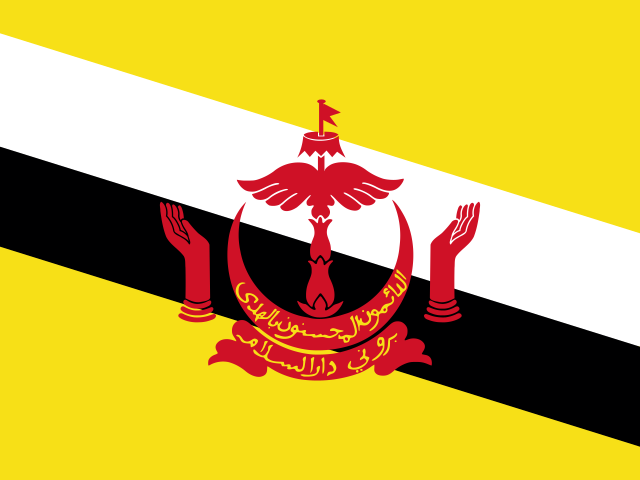 Brunei
 Cambodia
 Indonesia
 Laos
Laos
 Malaysia
 Myanmar
 Philippines
 Singapore
 Thailand
 Timor-Leste
 Vietnam
West Asia / Middle East
 Armenia
 Azerbaijan
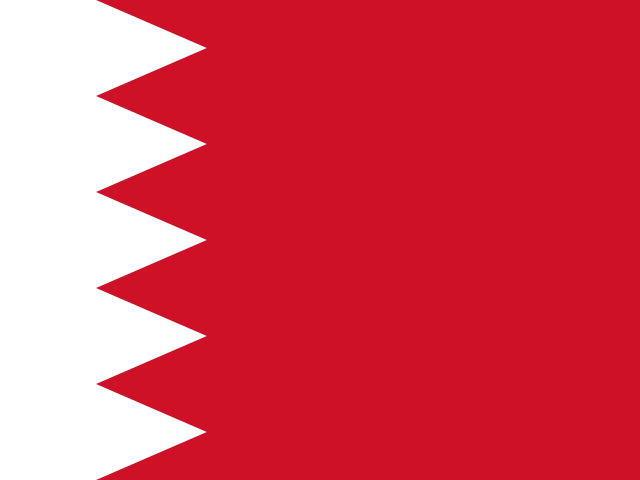 Bahrain
 Cyprus
 Georgia
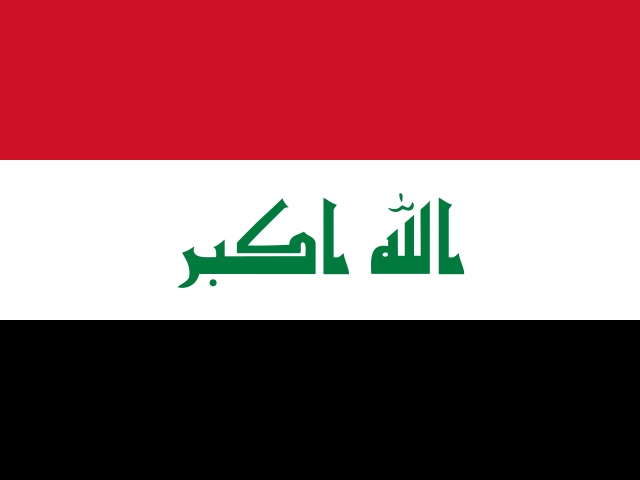 Iraq
Iraq
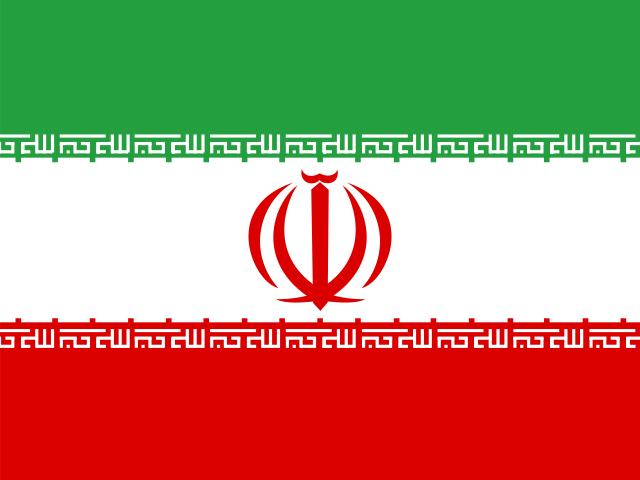 Iran
Iran
 Israel
 Jordan
 Kuwait
 Lebanon
 Oman
Oman
 Palestine ¹
 Qatar
Qatar
 Saudi Arabia
 Syria
Syria
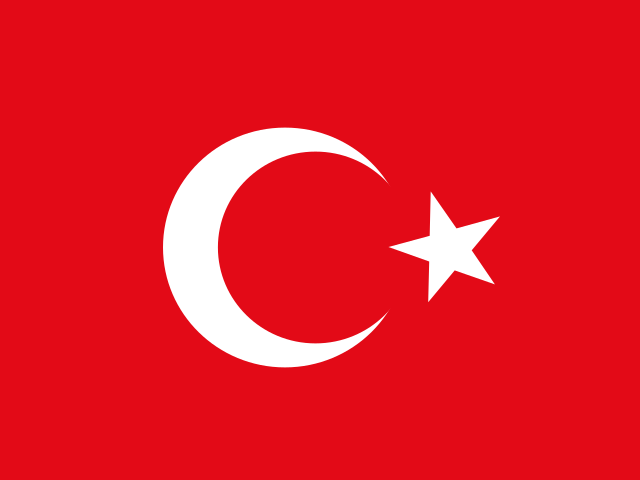 Türkiye
 United Arab Emirates
 Yemen
Yemen
Asian state alliances and trade agreements
- ASEAN - Association of Southeast Asian Nations
- SAARC - South Asian Association for Regional Cooperation
- GCC - Gulf Cooperation Council
- SCO - Shanghai Cooperation Organisation
- RCEP - Regional Comprehensive Economic Partnership
- APEC - Asia-Pacific Economic Cooperation
- Arab League
- CSTO - Collective Security Treaty Organization
- EAEU - Eurasian Economic Union
- BIMSTEC - Bay of Bengal Initiative
- Pacific Islands Forum
- ADB - Asian Development Bank
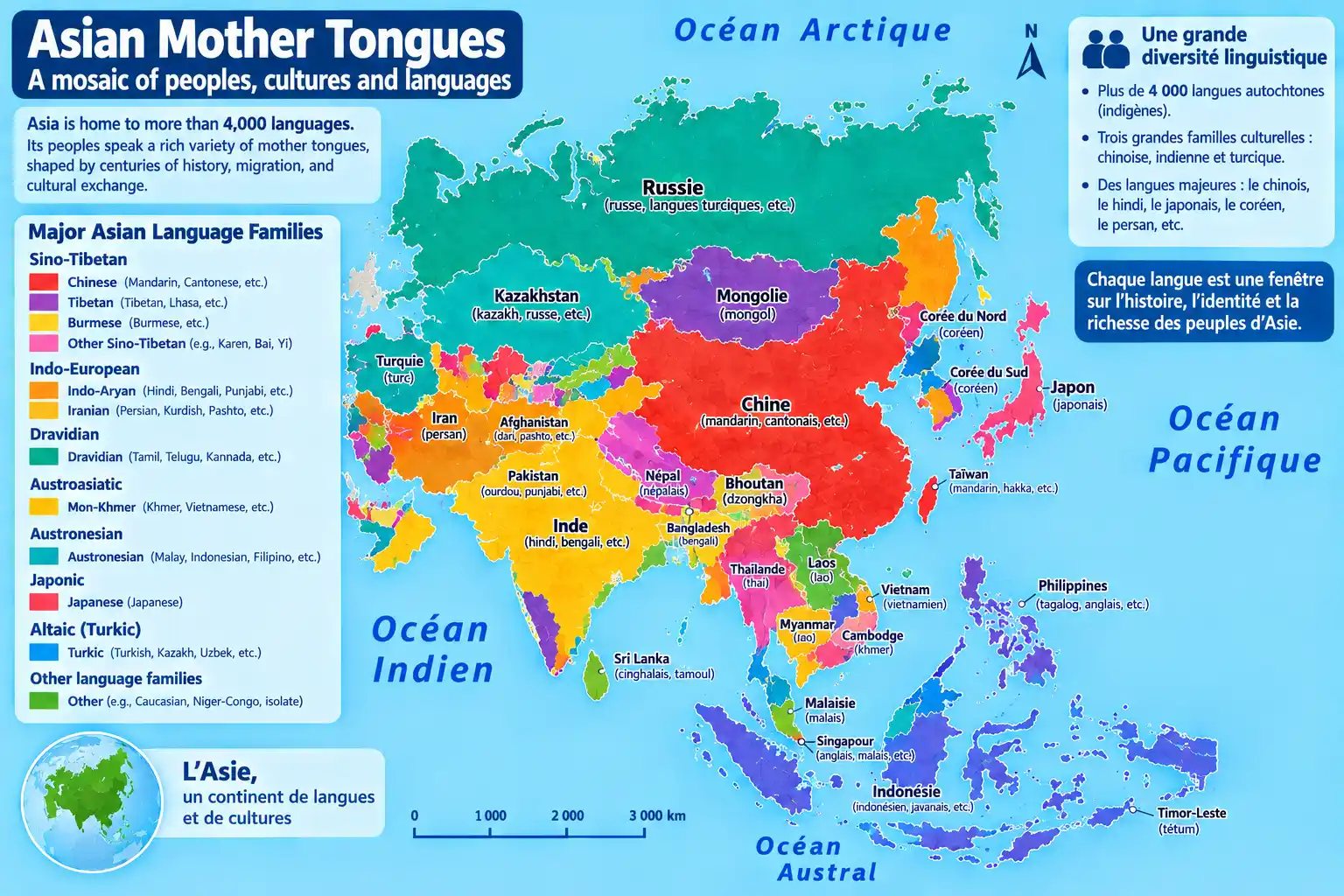
Most spoken native languages in Asia
| Language | Share of Asians | Native speakers (millions) |
|---|---|---|
| Mandarin | 18.0% | 940 million |
| Hindi | 12.0% | 600 million |
| Spanish | 0.5% | 25 million |
| Bengali | 5.5% | 270 million |
| Japanese | 2.5% | 125 million |
| Russian | 3.5% | 170 million |
| Arabic | 4.5% | 220 million |
| Urdu | 2.5% | 120 million |
| Indonesian | 1.5% | 75 million |
| Korean | 1.5% | 80 million |
| Turkish | 1.5% | 80 million |
| Vietnamese | 1.5% | 75 million |
| Thai | 1.0% | 50 million |
| Persian | 1.0% | 50 million |
| Tamil | 1.0% | 50 million |
Asia is the most multilingual continent on the planet, with more than 2,300 languages recorded, divided into several major families: Sino-Tibetan (Mandarin, Cantonese, Tibetan, Burmese), Indo-European (Hindi, Bengali, Urdu, Persian, Russian), Austronesian (Indonesian, Malay, Tagalog, Malagasy), Dravidian (Tamil, Telugu, Kannada), Altaic (Turkish, Mongolian, Korean, Japanese), Afro-Asiatic (Arabic, Hebrew), and Tai-Kadai (Thai, Lao). In addition to these indigenous languages, colonial languages have become official or working languages: English (India, Pakistan, Philippines, Singapore), French (Indochina, Lebanon, Syria), Portuguese (Timor-Leste, Macau), and Spanish (Philippines). The main religions are Hinduism (India, Nepal), Buddhism (East Asia, Southeast Asia), Islam (Middle East, Central Asia, South Asia), Christianity (Philippines, Armenia, Georgia), Taoism, Confucianism, and Shinto.
Population and density in Asia
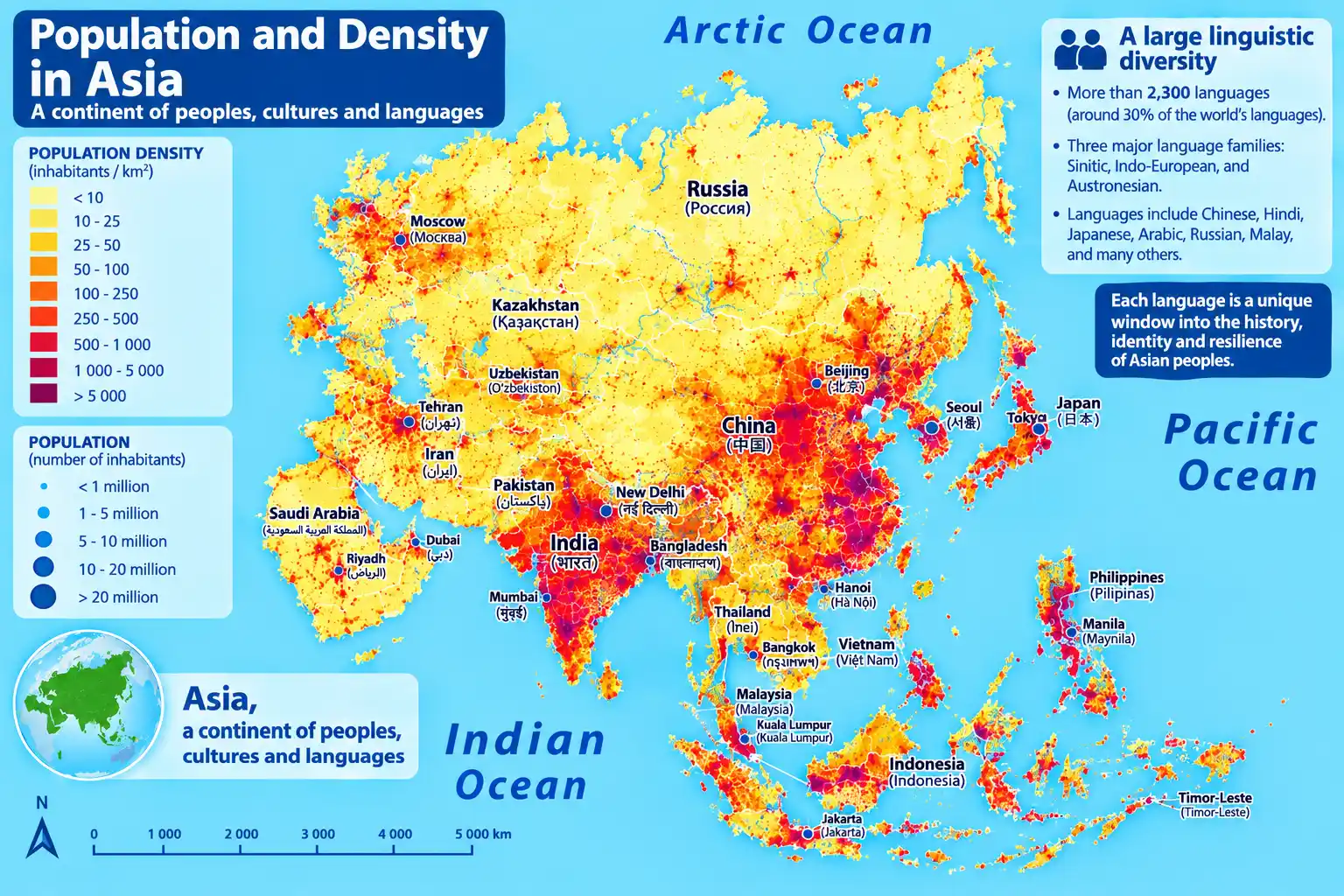
Asia is the world’s most populous continent, with about 4.7 billion inhabitants, or 60% of the world population. Its average density is about 105 inhabitants per km², but with extreme contrasts: the Ganges plains, eastern China, and the island of Java are among the most densely populated regions on the planet, while Mongolia, Tibet, Arabia, and Siberia are almost empty. About 50% of Asians live in cities, a proportion that should exceed 60% by 2050, driven by rapid urbanization (Tokyo, Delhi, Shanghai, Dhaka, Cairo, Mumbai, Beijing).
Singapore: (8,358 inhabitants/km²),
Hong Kong: (6,300 inhabitants/km²),
Bahrain: (1,900 inhabitants/km²),
Maldives: (1,700 inhabitants/km²),
Bangladesh: (1,300 inhabitants/km²),
Taiwan: (650 inhabitants/km²),
India: (480 inhabitants/km²).
Conversely, the lowest densities are found in Mongolia (2 inhab/km²), Kazakhstan (7 inhab/km²), Saudi Arabia (16 inhab/km²), Russia (9 inhab/km²), and Turkmenistan (13 inhab/km²). The most populous countries in Asia are China (≈1.41 billion), India (≈1.43 billion), Indonesia (≈280 million), Pakistan (≈240 million), and Bangladesh (≈170 million). Asia also has the youngest population in the world in some regions (South Asia, Central Asia) and an aging population in East Asia (Japan, South Korea, China).
Asian demography
With a median age of about 32 years, Asia shows great demographic diversity: Japan and South Korea are among the oldest countries in the world (median age >45), while Afghanistan, Pakistan, and many South Asian countries have very young populations (median age <25). This heterogeneity reflects demographic transitions at very different stages.
Asia’s average fertility rate is 2.0 children per woman, close to the replacement level (2.1). The most fertile countries are Afghanistan (4.5), Pakistan (3.5), Iraq (3.3), Yemen (3.2), and the Philippines (2.7). The least fertile are South Korea (0.7), Taiwan (0.9), Singapore (1.0), Japan (1.2), and China (1.2).
Asia is the continent that experienced the strongest population growth in the 20th century, rising from 1.4 billion inhabitants in 1950 to 4.7 billion today. This growth should continue until 2050, but at a slower pace, before stabilizing and then gradually declining in some regions (Japan, Korea, China). International migration plays a major role: Asia is both the leading source and the leading destination of migrants in the world, with major flows toward the Gulf countries, Southeast Asia, and the West.
The demographic transition is complete in Japan, South Korea, Taiwan, and Singapore; advanced in China and Thailand; ongoing in India and Indonesia; and beginning in Afghanistan and Pakistan. This diversity explains why Asia should remain the world’s most populous continent throughout the 21st century, while its relative share declines in favor of Africa.
📊 Asia demographic summary table
| Indicator | Value |
|---|---|
| Total population (48 countries) | 4.7 billion |
| Median age | 32 years |
| Fertility rate | 2.0 children / woman |
| Infant mortality rate | ≈ 25 ‰ |
| Life expectancy | 73.5 years (men: 71.5 - women: 75.5) |
| Population aged 65 and over | 9.5 % |
| Population aged 0-14 | 24.5 % |
Time zones in Asia
Asia spans 11 main time zones, from UTC+2 to UTC+12:
- UTC+2 (EET): Cyprus, Israel, Jordan, Lebanon, Palestine, Syria.
- UTC+3 (MSK / AST): Saudi Arabia, Bahrain, Iraq, Kuwait, Qatar, Russia (Moscow), Türkiye, Yemen.
- UTC+3:30 (IRST): Iran.
- UTC+4 (GST / AMT): Armenia, Azerbaijan, United Arab Emirates, Georgia, Oman.
- UTC+4:30 (AFT): Afghanistan.
- UTC+5 (PKT / YEKT): Kazakhstan (west), Uzbekistan, Pakistan, Tajikistan, Turkmenistan, Russia (Yekaterinburg).
- UTC+5:30 (IST): India, Sri Lanka.
- UTC+5:45 (NPT): Nepal.
- UTC+6 (BST / OMST): Bangladesh, Bhutan, Kazakhstan (east), Kyrgyzstan, Russia (Omsk).
- UTC+6:30 (MMT): Myanmar.
- UTC+7 (ICT / KRAT): Cambodia, Indonesia (west), Laos, Thailand, Vietnam, Russia (Krasnoyarsk).
- UTC+8 (CST / AWST): China, Hong Kong, Indonesia (central), Malaysia, Mongolia (east), Philippines, Singapore, Taiwan, Russia (Irkutsk).
- UTC+9 (JST / KST): North Korea, South Korea, Japan, Indonesia (east), Russia (Yakutsk).
- UTC+10 (AEST / VLAT): Russia (Vladivostok).
- UTC+11 (SBT / MAGT): Russia (Magadan).
- UTC+12 (NZST / PETT): Russia (Kamchatka).
Special cases and exceptions: China uses a single time zone (UTC+8) for the entire country, despite spanning the equivalent of five time zones. India and Sri Lanka are at UTC+5:30, a half-hour zone. Nepal is at UTC+5:45, one of the rare quarter-hour zones. Iran and Afghanistan use non-integer offsets. Russia spans 11 time zones, from UTC+2 to UTC+12.
Asian institutions
Geology and geography of Asia
Geologically, Asia is the heart of the Eurasian Plate, the largest tectonic plate in the world. It is bordered by the Indian Plate to the south, which collides with the Eurasian Plate and forms the Himalayas and the Tibetan Plateau; by the Pacific Plate to the east, which creates the Pacific Ring of Fire (Japan, Philippines, Indonesia); and by the Arabian Plate to the southwest, responsible for volcanism and earthquakes in the Middle East. This intense tectonic activity explains Asia’s high seismicity (Japan, Indonesia, Iran, Türkiye, Nepal) and the presence of many active volcanoes.
The conventional geographic border between Asia and Europe runs along the Ural Mountains, the Ural River, the Caspian Sea, the Caucasus, and the Bosphorus Strait. Asia is bordered by the Arctic Ocean to the north, the Pacific Ocean to the east, and the Indian Ocean to the south.
Main geological and geographical features of Asia:
- Himalayas: the world’s highest mountain range, with Everest (8,849 m) and K2 (8,611 m).
- Tibetan Plateau: the world’s largest and highest plateau (average >4,500 m), nicknamed the “Roof of the World.”
- Indo-Gangetic Plains: vast alluvial plains among the most fertile and densely populated in the world.
- Deserts: Gobi (Mongolia/China), Taklamakan (China), Thar (India/Pakistan), Rub’ al Khali (Saudi Arabia).
- Major rivers: Yangtze (6,300 km, China), Yenisei (5,539 km, Russia), Mekong (4,350 km), Ganges (2,525 km), Indus (3,180 km), Tigris and Euphrates.
- Lakes: Caspian Sea (371,000 km², largest lake in the world), Lake Baikal (31,722 km², deepest in the world), Aral Sea.
- Active volcanism: Fuji (Japan), Merapi and Krakatoa (Indonesia), Pinatubo (Philippines), Damavand (Iran).
Climate in Asia
Asia has the greatest climatic diversity in the world, due to its latitudinal extent (from the Arctic to the equator) and varied relief. It contains every climate type, from polar to equatorial, including the most arid deserts and the wettest regions on the planet.
| Climate zone | Asian climate |
|---|---|
| Polar / subarctic | Very long, cold winters (-40 to -20°C), short, cool summers (0-10°C), low precipitation (snow) — Siberia, northern Mongolia |
| Continental | Cold winters (-20 to 0°C), hot summers (20-35°C), moderate precipitation — Central Asia, northern China, Mongolia |
| Desert | Very low precipitation (< 100 mm), extreme temperature ranges (-10°C to +50°C) — Arabia, Iran, Gobi, Taklamakan, Thar |
| Mediterranean | Hot, dry summers (25-35°C), mild, wet winters (10-15°C) — Türkiye, Levant, Israeli coast |
| Tropical / equatorial | Hot and humid all year (25-30°C), heavy rainfall (monsoon) — India, Southeast Asia, Indonesia, Philippines |
| Monsoon | Alternating dry season / rainy season (June-September), strong winds, very abundant precipitation — India, Bangladesh, Myanmar, Vietnam |
| Mountain | Extreme altitudinal variations, snow at altitude, glaciers — Himalayas, Karakoram, Caucasus |
Weather records in Asia
🔥 Highest temperature officially recorded in Asia: 54.0°C in Mitribah (Kuwait), on July 21, 2016, and in Turbat (Pakistan), on May 28, 2017.
🌡️ Hottest place on average annually: Dallol (Ethiopia, Africa) is not in Asia, but in Asia, Kuwait City has some of the highest averages.
❄️ Lowest temperature in Asia: −67.7°C in Oymyakon (Siberia, Russia), on February 6, 1933.
🌧️ Rainiest place in Asia: Mawsynram (India) ≈ 11,872 mm/year, one of the wettest places on the planet.
☀️ Driest regions in Asia: the Rub’ al Khali (Saudi Arabia) and the Gobi Desert (Mongolia/China).
🏔️ Highest peak in Asia and the world: Everest (8,849 m, Nepal/China).
Energy in Asia
Asia is the world’s largest energy consumer and producer. It holds the world’s largest oil and natural gas reserves (Middle East), as well as immense renewable energy potential (solar, wind, hydropower, geothermal). China is the world’s largest electricity producer and the largest investor in clean energy. India, Japan, South Korea, and ASEAN countries are also major players in the energy transition.
The main Asian energy models are:
- Oil and gas model: Saudi Arabia (world’s largest oil exporter), Russia, Iran, Iraq, Kuwait, Qatar (world’s largest LNG exporter), United Arab Emirates, Kazakhstan, China (world’s largest oil importer), India, Japan, South Korea.
- Coal model: China (≈ 60% of its electricity from coal, world’s largest producer and consumer), India (≈ 70% coal), Indonesia, Australia (exporter).
- Nuclear model: China (rapidly expanding fleet), Japan (gradual restart after Fukushima), South Korea (≈ 30%), India (≈ 3%), Pakistan.
- Modern renewable model (solar, wind, hydropower): China (world’s largest solar and wind producer), India (target of 500 GW renewables by 2030), Japan, South Korea, Vietnam (strong solar development), Thailand, Philippines (geothermal), Indonesia (geothermal).
 Nigeria
 Senegal
 Ivory Coast
 South Africa
 Algeria
 United States
 Canada
 France
 Germany
 Italy
Italy United Kingdom
 Spain
Spain Ukraine
 Netherlands
 Belgium
 Switzerland
 Australia
 New Zealand