
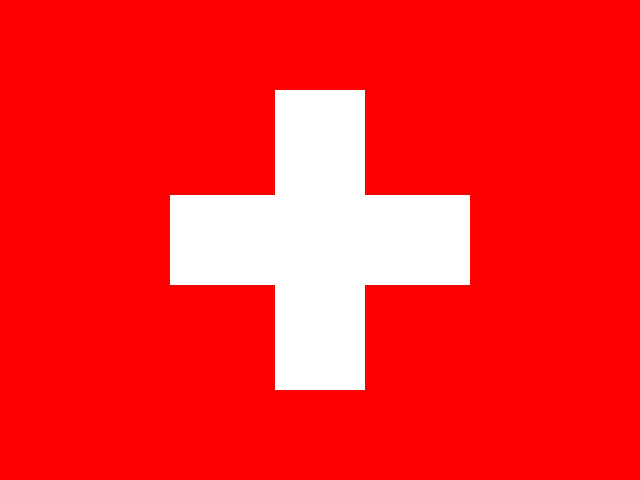
Switzerland
Complete data on Switzerland: geography, population, economy, culture, institutions, key indicators and statistics. Information updated in real time.
Time and date in Switzerland
Overview
Switzerland, officially the Swiss Confederation, is a federal state in Central Europe. It is bordered by five countries: France, Germany, Austria, Liechtenstein and Italy. With 9.1 million inhabitants (2025), it is one of the most prosperous countries in the world.
Switzerland is a federal democracy made up of 26 cantons. It is known for its political and military neutrality, its banking system, its watches, its chocolate and its cheese. Its capital is Bern, and it has four national languages: German, French, Italian and Romansh. The country is not a member of the European Union, but maintains close relations with it through bilateral agreements. The Swiss franc (CHF) is its currency.
Data on Switzerland
Geography of Switzerland
Switzerland is a landlocked country in Central Europe, with no access to the sea. With an area of 41,291 km², it is bordered by France to the west, Germany to the north, Austria and Liechtenstein to the east, and Italy to the south. The country is dominated by two major natural regions: the Jura in the northwest and the Alps in the south and east, which cover about 60% of the territory.
Swiss relief is very mountainous. The Alps are home to many peaks exceeding 4,000 metres, including Dufourspitze (4,634 m), the country's highest point. The Swiss Plateau, between the Jura and the Alps, concentrates most of the population and economic activity. The country has many famous lakes, such as Lake Geneva, Lake Constance, Lake Maggiore and Lake Lugano.
The hydrographic network is dominated by the Rhine, which rises in the Swiss Alps and forms part of the border with Germany. The Rhône crosses Valais before flowing into Lake Geneva, and the Po rises in Ticino. Switzerland also has many glaciers, although they are retreating rapidly due to climate change.
Population and demographics
Switzerland has about 9,124,300 inhabitants as of 31 December 2025, according to provisional figures from the Federal Statistical Office (FSO). Its average density is about 221 inhabitants/km², but the population is very unevenly distributed: the Swiss Plateau is densely populated, while the Alpine regions are much less dense.
The country is experiencing marked demographic ageing. For the first time in 2025, the number of people aged 65 or over (1,811,000) exceeded that of those under 20 (1,802,000). The fertility rate is low, around 1.28 children per woman in 2025. Life expectancy is very high: 86.3 years for women and 82.7 years for men. About 27.7% of the population is of foreign nationality.
| Indicator | Value |
|---|---|
| Total population (2025) | 9,124,300 |
| Population density | ~221 inhab/km² |
| Fertility rate | 1.28 children per woman |
| Life expectancy | 84.5 years (men: 82.7 - women: 86.3) |
| Population aged 65+ | 1,811,000 (first time > under 20) |
| Foreign population | ~27.7 % |
Urban distribution is dominated by the major agglomerations: Zurich (about 1.5 million in the agglomeration), Geneva (about 1 million), Basel (about 0.8 million), Bern (capital, about 0.4 million) and Lausanne (about 0.4 million).
Population change (1950-2025)
Population by age (2025)
Climate in Switzerland: temperatures and precipitation
Switzerland lies in a temperate climate zone, but its varied relief creates a wide diversity of local climates. The Swiss Plateau has a temperate oceanic climate, with mild summers and cool winters. The Alps have a mountain climate, with cold, snowy winters and cooler summers. Ticino, south of the Alps, enjoys a milder Mediterranean climate.
According to MeteoSwiss, the average annual temperature in Switzerland in 2025 was 7.0 °C, slightly above the current climatic average (6.9 °C). Summers are generally warm, with averages around 18-20 °C on the Plateau and peaks that can exceed 35 °C. Winters are cold, with averages around 0 °C in the plains and negative temperatures in the mountains.
Precipitation is abundant and spread throughout the year. The wettest regions are the Alps and the southern slope, with annual totals that can exceed 2,000 mm. The Swiss Plateau receives about 1,000 to 1,200 mm per year, while some sheltered Alpine valleys (such as the central Valais) are drier, with about 600 mm.
Average monthly temperatures (°C) - Swiss Plateau
Monthly precipitation (mm) - Swiss Plateau
Data based on historical averages (1991-2020) for the Swiss Plateau. Source: MeteoSwiss.
Languages
Switzerland has four national languages: German (spoken by about 61.1% of the population), French (22.6%), Italian (7.8%) and Romansh (0.4%). The first three are official languages of the federal administration, with Romansh being official in dealings with Romansh speakers.
Main languages in Switzerland (2024)
Switzerland is a multilingual and cosmopolitan country. According to the FSO, in 2024, 25% of the permanent resident population had a non-national language as their main language, compared with 19% in 2010. The most widespread foreign languages are English (6%), Albanian and Portuguese (3% each), followed by Spanish and Serbo-Croatian (more than 2% each). About 16% of the population aged 15 and over has more than one main language.
Religions practised in Switzerland
Switzerland is a country with a Christian tradition, but society is secularising rapidly. According to the FSO, between 2010 and 2024, the share of Roman Catholics and Reformed Protestants fell by 9 percentage points each, reaching 30% and 19% respectively.
Religions in Switzerland (2024)
The most striking fact is the strong growth of people with no religious affiliation: their share increased by 17 percentage points between 2010 and 2024, reaching 37%. The share of Muslims increased slightly, from 4.5% to 6%. Other religious communities (Jewish, Hindu, Buddhist, etc.) represent smaller proportions. Religious practice is declining sharply: in 2024, nearly half of the population had never attended a religious service in the previous twelve months.
Economy and GDP
Switzerland has one of the most prosperous and competitive economies in the world. Its GDP amounted to about $1,044.6 billion in 2025, with a GDP per capita of about $114,800, one of the highest in the world. The country recorded growth of 1.6% in 2025, driven by domestic demand and investment.
Evolution of Swiss GDP (billions $)
The Swiss economy is highly diversified and internationally oriented. The tertiary sector dominates, with finance (Zurich is a global financial centre), insurance, trade and tourism. The secondary sector is highly specialised: pharmaceutical and chemical industry (Novartis, Roche), machinery and equipment (ABB), watchmaking (Rolex, Swatch) and food processing (Nestlé). Agriculture accounts for only a small share of GDP, but the country is renowned for its cheeses and chocolate.
Switzerland is an exporting power of high-tech products and financial services. Its main trading partners are Germany, the United States, France, Italy and the United Kingdom. The country is also a major player in commodity trading (Geneva and Zug). Tourism is an important source of foreign currency, with more than 43.9 million overnight stays in 2025.
Breakdown of the economy by sector (% GDP)
Socio-economic indicators
History
The history of Switzerland is marked by the gradual construction of a confederation. The Federal Charter of 1291, considered the founding act, united the cantons of Uri, Schwyz and Unterwalden to resist the Habsburgs. Over the centuries, other cantons joined the alliance. The Protestant Reformation (Zwingli in Zurich, Calvin in Geneva) deeply divided the country in the 16th and 17th centuries.
History of Switzerland: major periods
Swiss neutrality was internationally recognised at the Congress of Vienna (1815). The modern federal state was founded in 1848 with the adoption of a constitution, transforming the confederation of states into a federal state with a central government, a bicameral parliament and a supreme court. This stable political system, based on direct democracy and federalism, is still in force.
In the 20th century, Switzerland maintained its neutrality during both world wars, while developing its economy and financial sector. It joined the UN in 2002, but remains outside the European Union, while maintaining close relations through bilateral agreements. The Swiss national day is 1 August, commemorating the 1291 Charter.
Culture
Switzerland has a rich cultural heritage, reflecting its linguistic and regional diversity. In literature, writers such as Jean-Jacques Rousseau (born in Geneva), Johanna Spyri (author of Heidi), Hermann Hesse (naturalised Swiss) and Charles-Ferdinand Ramuz have left their mark on letters. In sciences, Switzerland gave birth to or hosted Albert Einstein (who developed relativity in Zurich and Bern) and the psychoanalyst Carl Jung.
In art, the country gave birth to Paul Klee and Alberto Giacometti, and hosted the Dada movement in Zurich during World War I. Swiss design and architecture are renowned (Le Corbusier, Herzog & de Meuron). Music is also lively, with world-renowned festivals such as Montreux and Lucerne.
Popular culture is just as lively. Switzerland is world-famous for its chocolate, its cheese (fondue, raclette), its watches and its Swiss Army knife. Traditional festivals such as the Basel Carnival, the Fête des Vignerons (Vevey) and the Alpine cattle drives attract many visitors. Sport is also important, with a strong tradition of alpine skiing, football and tennis (Roger Federer).
 Nigeria
 Senegal
 Ivory Coast
 South Africa
 Algeria
 United States
 Canada
 China
 India
 Japan
 South Korea
 Turkey
 Saudi Arabia
 Iran
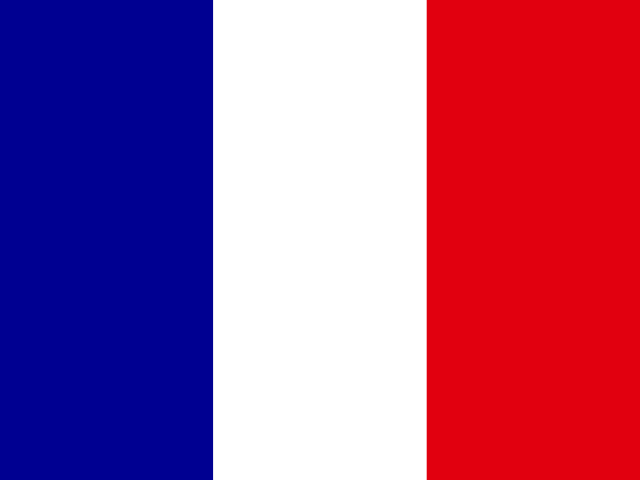 France
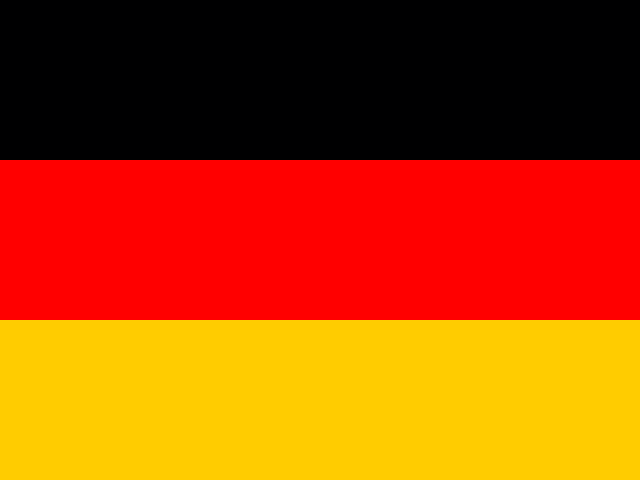 Germany
 Italy
 United Kingdom
 Spain
 Ukraine
 Russia
 Netherlands
 Belgium
 Australia
 New Zealand