
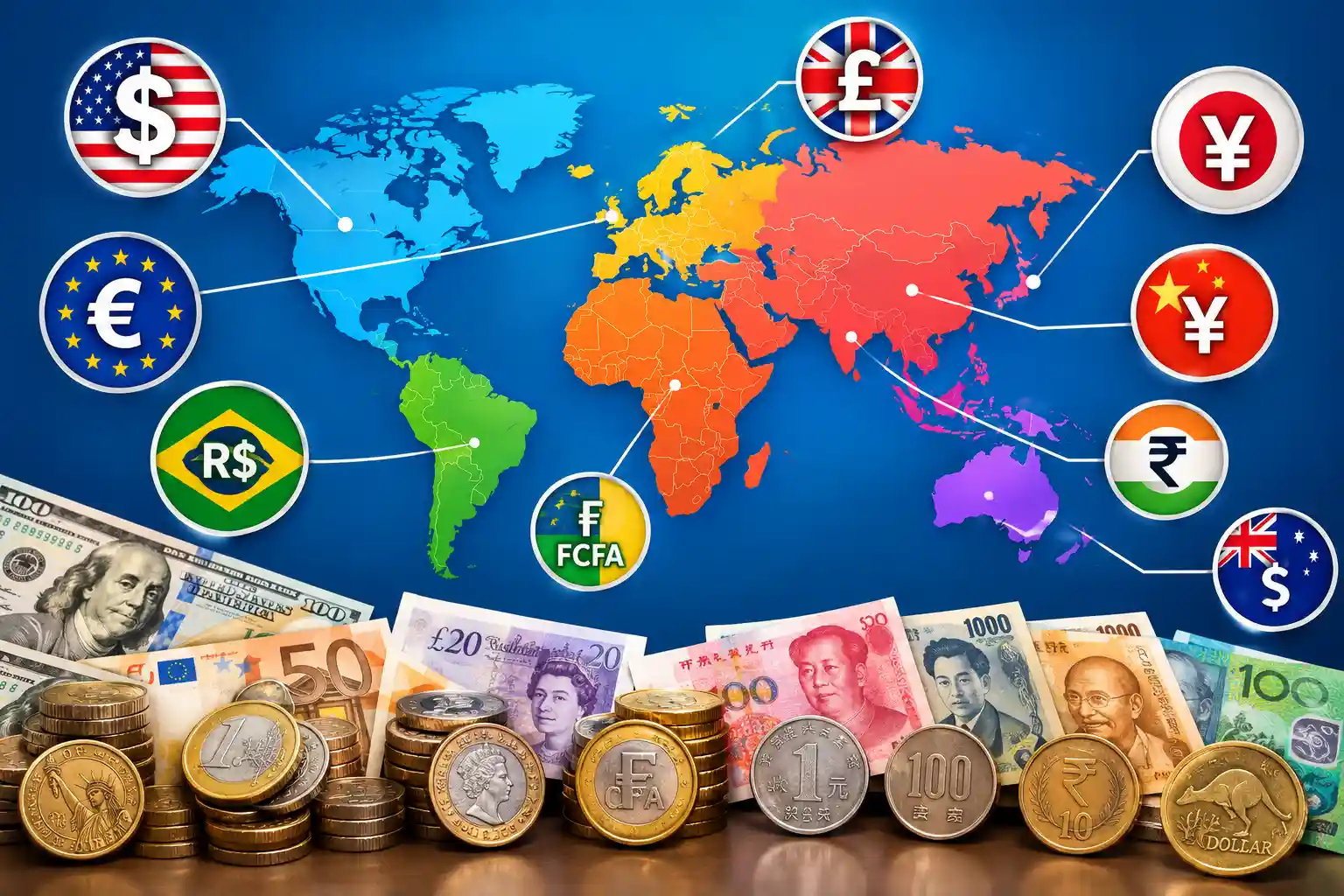
Currencies & Money of the world
All currencies of all countries of the world, classified by geographical zone and by country. Find for each currency its symbol, its ISO 4217 code, and an image of the currency.
A currency is the official monetary unit of a state or a monetary zone. It serves as a unit of account, a store of value and a medium of exchange. There are currently around 180 currencies in circulation worldwide, some of which are shared by several countries (such as the euro, used by 20 member states of the European Union, or the CFA franc, used by 14 African countries).
The foreign exchange market (Forex) is the largest financial market in the world with a daily trading volume estimated at $7,500 billion, nearly 4 times the annual GDP of France. The international reserve currencies: US dollar (USD), euro (EUR), Japanese yen (JPY), pound sterling (GBP), Chinese yuan (CNY) and Canadian dollar (CAD), alone account for more than 95% of foreign exchange reserves held by central banks.
Each currency is identified by a three-letter ISO 4217 code (e.g. EUR, USD, JPY) and by a currency symbol (€, $, ¥, £...).
This page classifies currencies by geographical zone (Europe, America, Asia, Africa, Oceania) and then by country. Each card shows the currency name, its ISO code, its symbol, the country or countries that use it, as well as an image of the currency.
Monetary unions and exchange zones
Most traded currencies on Forex
The foreign exchange market (Forex) is dominated by a small number of currency pairs. The seven major currencies alone (USD, EUR, JPY, GBP, AUD, CAD, CHF) account for about 88% of the daily transaction volume.
| Rank | Currency | Code | Share of Forex volume |
|---|---|---|---|
| 1 | US dollar | USD | ≈ 88 % |
| 2 | Euro | EUR | ≈ 31 % |
| 3 | Japanese yen | JPY | ≈ 17 % |
| 4 | Pound sterling | GBP | ≈ 13 % |
| 5 | Chinese yuan | CNY | ≈ 7 % |
| 6 | Australian dollar | AUD | ≈ 6 % |
| 7 | Canadian dollar | CAD | ≈ 5 % |
| 8 | Swiss franc | CHF | ≈ 5 % |
| 9 | Hong Kong dollar | HKD | ≈ 3 % |
| 10 | Singapore dollar | SGD | ≈ 2 % |
Percentages are expressed as a share of total volume and the sum exceeds 100% because each transaction involves two currencies. Source: BIS Triennial Survey.
Currencies of Europe
Currencies of America
Currencies of Asia
Currencies of Africa
Currencies of Oceania
Central banks and monetary policy
Each currency is issued and regulated by a central bank which defines monetary policy, sets key interest rates and manages foreign exchange reserves. The main central banks worldwide are:
- Fed (Federal Reserve)
- ECB (European Central Bank)
- BoJ (Bank of Japan)
- BoE (Bank of England)
- PBoC (People's Bank of China)
- Reserve Bank of Australia
- SNB (Swiss National Bank)
- Bank of Canada
- IMF (International Monetary Fund)
- BIS (Bank for International Settlements)
Monetary policy decisions (raising, lowering or maintaining key rates) directly influence the relative value of currencies on the foreign exchange market. A rate hike tends to appreciate the currency concerned, while a cut tends to depreciate it.
Cryptocurrencies: digital currencies
Since the creation of Bitcoin in 2009 by the pseudonym Satoshi Nakamoto, cryptocurrencies have established themselves as a new class of decentralised digital assets. Unlike traditional currencies, they are not issued by a central bank and rely on blockchain technology. Among the main ones:
| Cryptocurrency | Symbol | Code | Type |
|---|---|---|---|
| Bitcoin | ₿ | BTC | Decentralised (PoW) |
| Ethereum | Ξ | ETH | Smart contracts (PoS) |
| Tether | ₮ | USDT | Stablecoin backed by USD |
| BNB | BNB | BNB | BNB Chain ecosystem |
| Solana | SOL | SOL | High-performance blockchain |
| XRP | XRP | XRP | Cross-border payments |
| USD Coin | $ | USDC | Stablecoin backed by USD |
| Cardano | ₳ | ADA | PoS blockchain |
Cryptocurrencies are not official currencies within the meaning of the IMF. Their legal status varies greatly from country to country (banned in China, regulated in the United States and in the EU via the MiCA regulation).
 Nigeria
 Senegal
 Ivory Coast
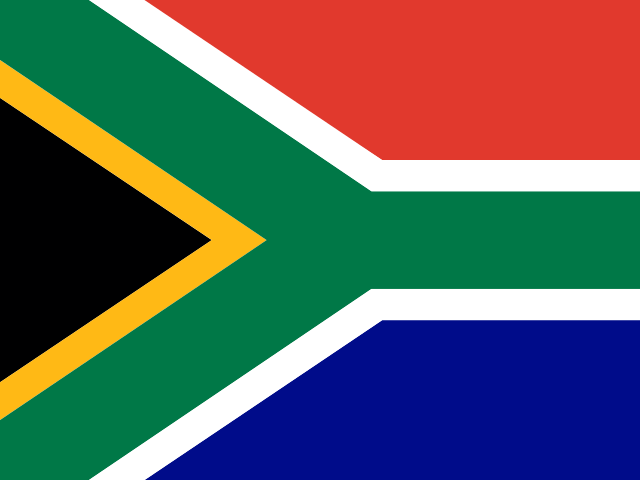 South Africa
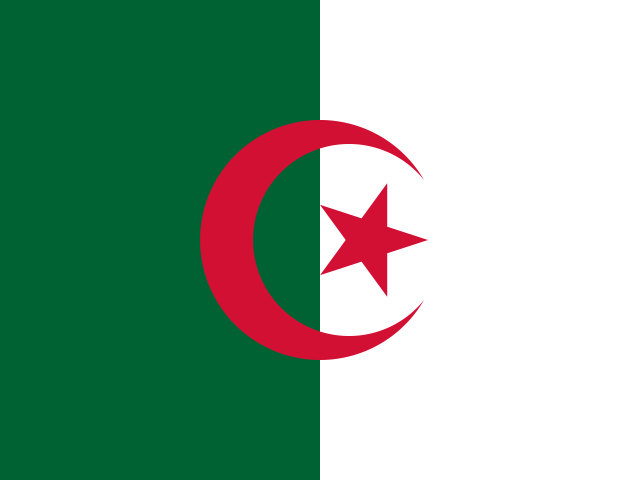 Algeria
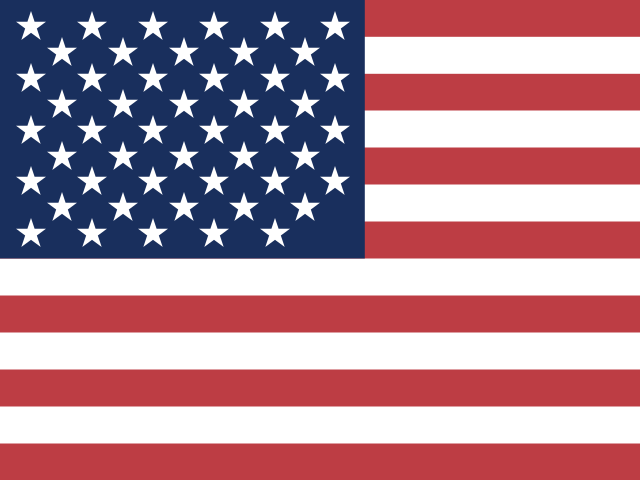 United States
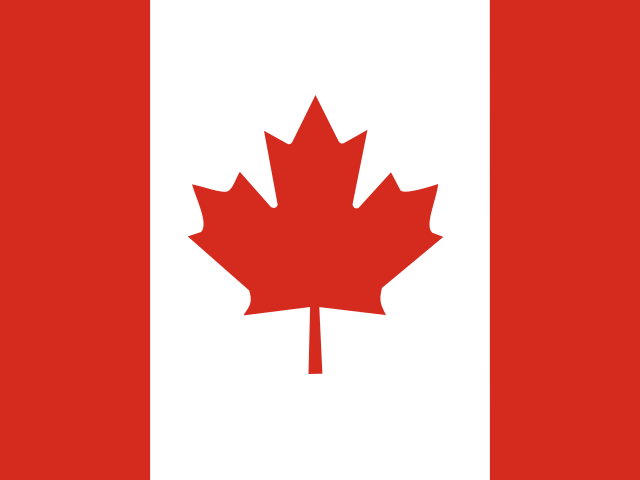 Canada
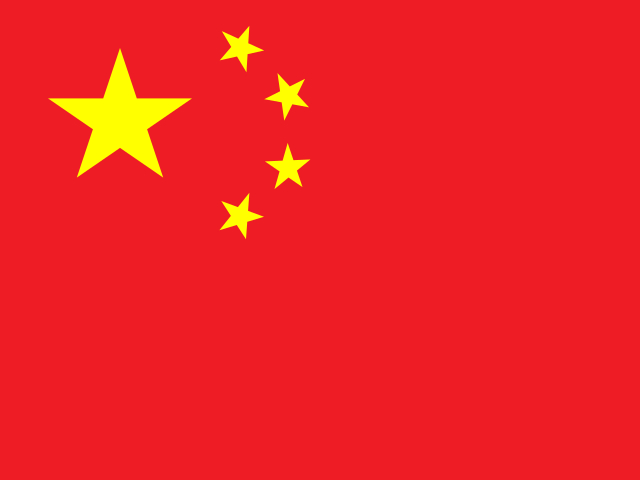 China
China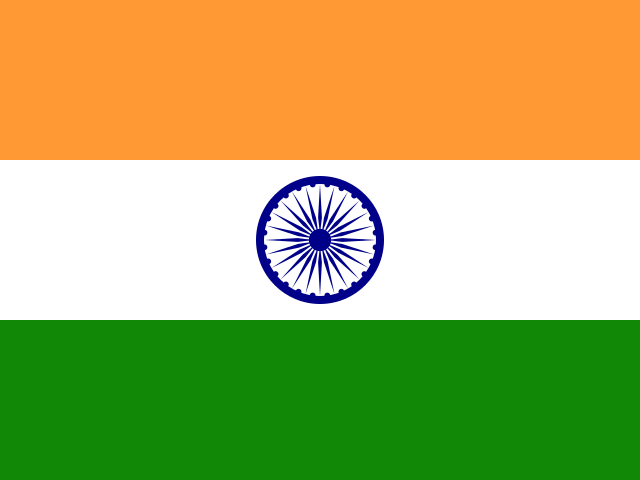 India
India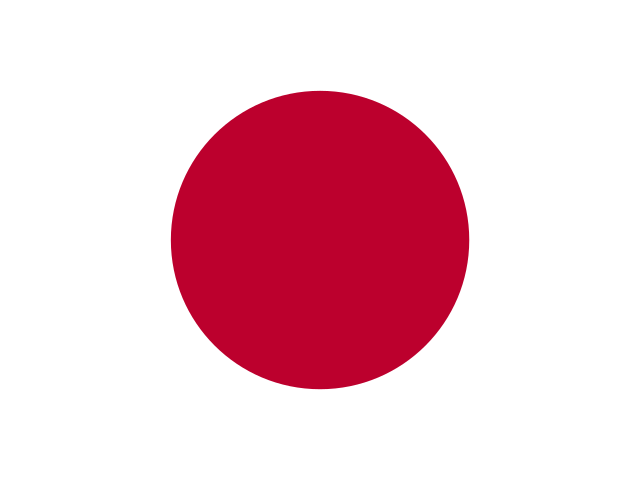 Japan
Japan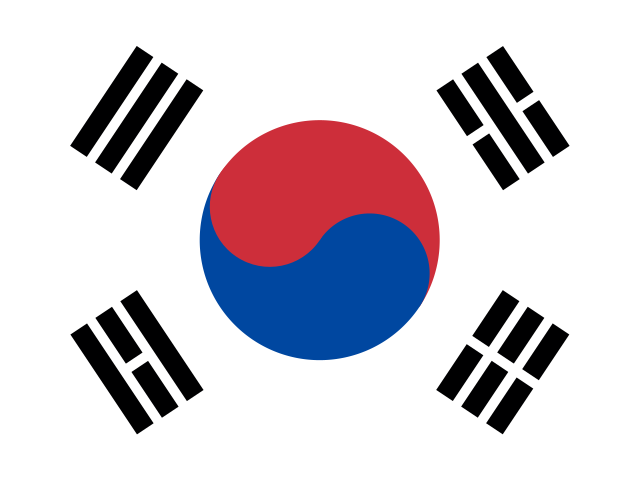 South Korea
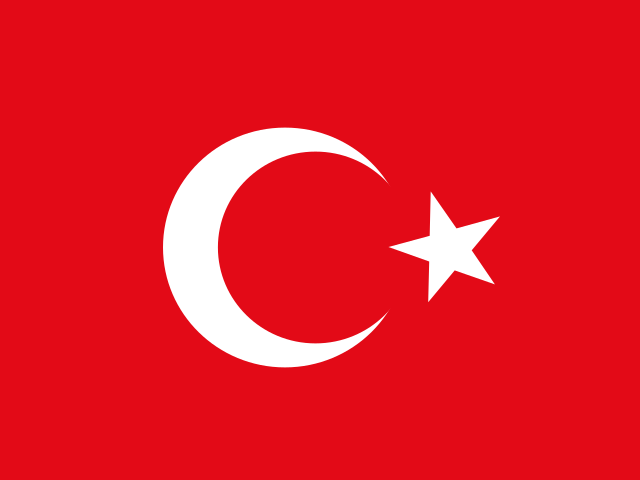 Turkey
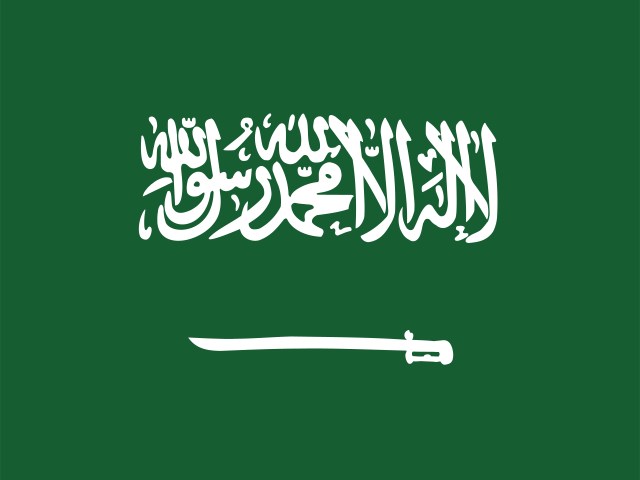 Saudi Arabia
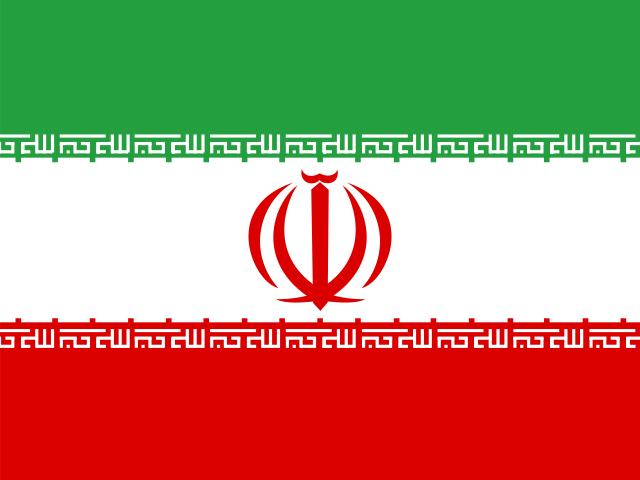 Iran
Iran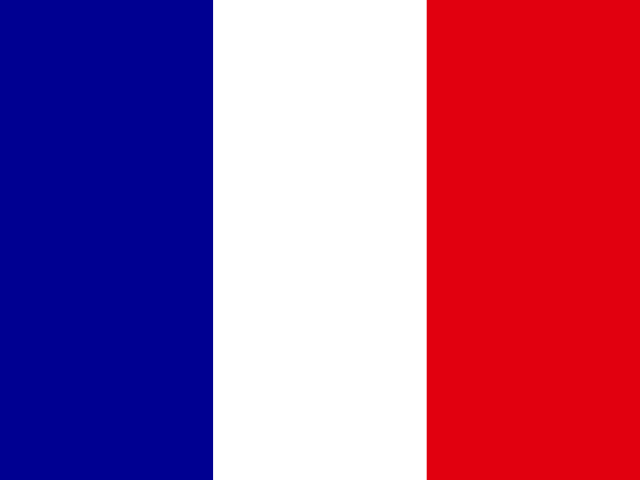 France
 Germany
 Italy
Italy United Kingdom
 Spain
Spain Ukraine
 Russia
 Netherlands
 Belgium
 Switzerland
 Australia
 New Zealand